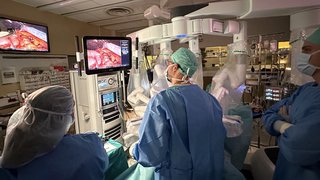
Discover how Medical Vision Goggles, developed by Samuel Achilefu, Ph.D., may revolutionize cancer surgery by enabling surgeons to see and remove all tumor cells without need for additional surgery.
Jennifer Lowrey lost her parents to Lynch syndrome cancers. Thanks to the Genetic Cancer Prevention Clinic at Harold C. Simmons Comprehensive Cancer Center at UT Southwestern, she is getting the preventive care she needs.
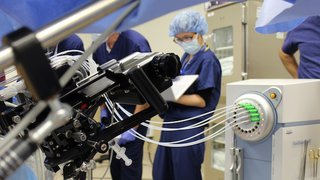
Robotic-assisted Whipple surgery for pancreatic cancer is one of the most complex GI procedures – and UT Southwestern is a leader in this field, training U.S. and international surgeons. Explore our Simulation Center and how robotic surgery can benefit patients.
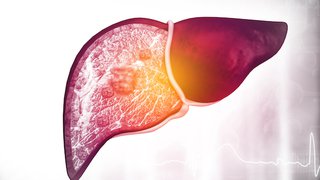
UT Southwestern has developed a simple blood test that can predict which patients with nonalcoholic fatty liver disease are most likely to develop liver cancer.
With brachytherapy, tiny implements deliver radiation directly to a tumor. And the list of cancers for which it is effective is expanding. Learn more about how UT Southwestern is leading the way in brachytherapy in Texas.
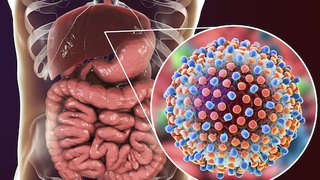
This study looked at medical records for patients who were cured of liver cancer at 31 North American medical centers. The findings demonstrate that patients who were treated and cured of their hepatitis C had significantly better survival rates than those patients whose hepatitis C was not treated.
Cancer death rates have dropped nearly 30% since 1991, and more that 2% between 2016 and 2017 alone – the biggest one-year drop on record. The driver has been precision medicine, an approach that focuses on personalization and collaboration. Learn more now.
Patients will go to the ends of the earth to get the best cancer care, and we’re taking our research even further – into space. In partnership with NASA, UT Southwestern is using data from the NASA Twins Study to develop a new drug to reduce cancer radiotherapy side effects.
Of the 7,000 liver transplants that take place nationwide every year, only 1 percent address bile duct cancer in the same surgery. In 2018, UT Southwestern brought the new surgical protocol for bile duct cancer and liver disease and was able to save Frisco resident Juan Cueto with a new liver by transplant and surgically removing the bile duct.
More Texans die from hepatocellular carcinoma, a form of liver cancer, than people in any other state. Explore why aggressive detection and treatment of liver diseases that cause this condition are key to good outcomes.