

Understanding uveitis: A vision-threatening but treatable eye disease
July 28, 2022
New Patient Appointment or 214-645-2020
UT Southwestern offers leading-edge care for children with pediatric uveitis, a rare but serious inflammatory eye condition. Our pediatric ophthalmologists use the latest diagnostics and treatments to help control inflammation and protect vision before long-term damage occurs.
Pediatric uveitis is a group of inflammatory eye conditions that affect the middle layer of the eye, called the uvea. This inflammation can also affect nearby structures such as the retina (the part of the eye that senses light), the lens (which helps focus vision), or the optic nerve (which sends visual signals to the brain).
Although uveitis is rare in children, it can be especially serious when it occurs. Uveitis can lead to complications such as glaucoma, cataracts, and vision loss if it’s not treated early and carefully monitored.
We offer one of the nation’s most advanced programs for pediatric uveitis, led by uveitis fellowship-trained ophthalmologists:
UT Southwestern is one of the few centers that offers consolidated care. This means that patients can receive ophthalmology evaluation and have their immunomodulatory therapy prescribed and managed in the same visit. For those who live outside the area and/or who have complex systemic diseases, our combined pediatric rheumatology-uveitis multidisciplinary clinic offers consolidated and coordinated care between the uveitis specialist and pediatric rheumatology team.
Families in nearby states – including Louisiana, Arkansas, Oklahoma, and New Mexico – often turn to UT Southwestern for the specialized care their child can’t find closer to home.
Most uveitis cases are idiopathic, meaning a cause is not identified. In other cases, it may be linked to the following conditions:
Pediatric uveitis types are based on which area of the eye is inflamed:
Each type is evaluated according to timing (acute, recurrent, or chronic) and severity.
Symptoms vary depending on the type of uveitis and the child’s age. Many children, especially those with JIA, may show no outward signs at first. In other cases, symptoms may include:
Younger children may not complain of symptoms because they cannot describe what they’re seeing. Some adjust to the reduced vision and may not notice problems in one eye. That’s why at-risk children, such as those with JIA, need routine screening by an ophthalmologist, even when no symptoms are reported.
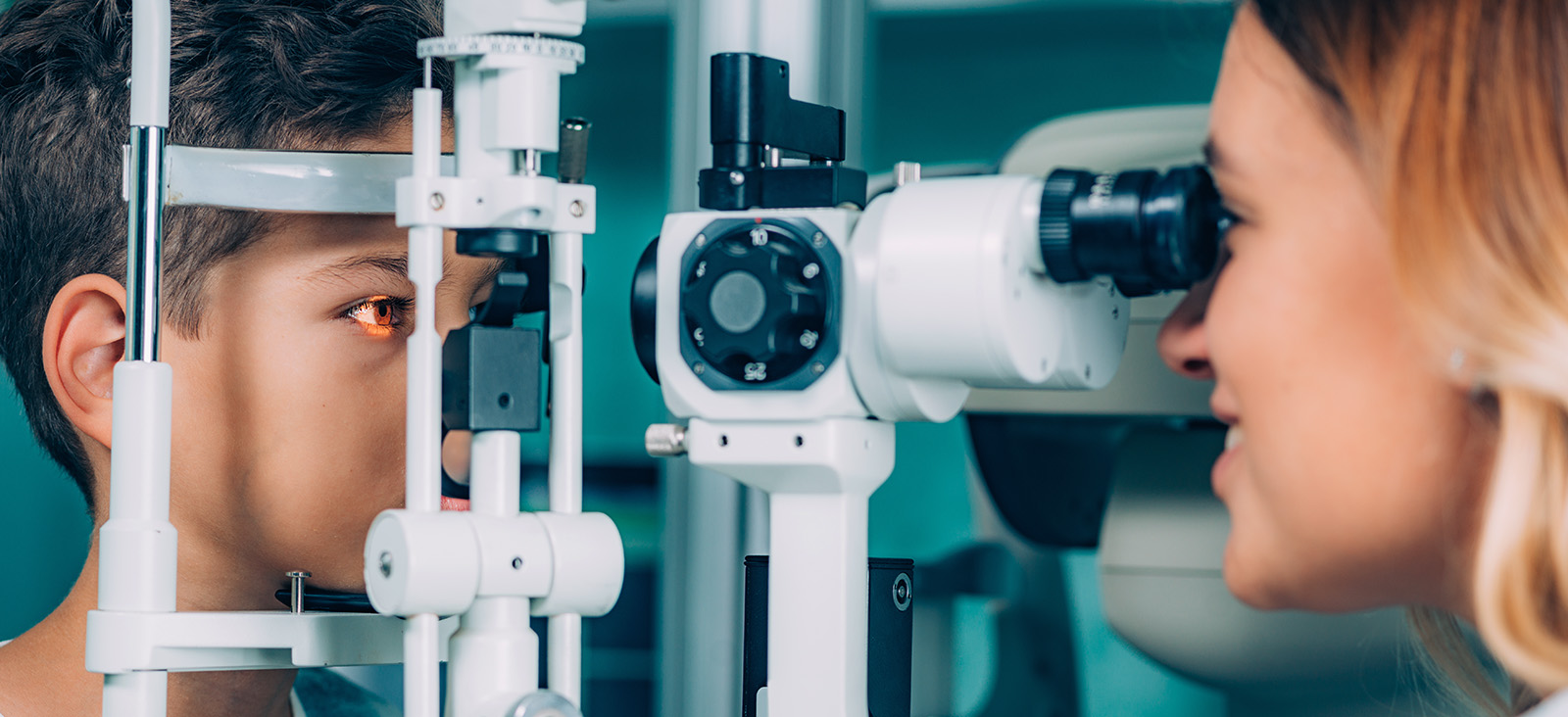
At UT Southwestern, our pediatric ophthalmologists begin with a detailed eye exam. Because uveitis can be difficult to detect, especially in young or asymptomatic children, we use specialized tools and tests, including:
Our pediatric eye specialists may order imaging tests, such as:
Children with JIA have a higher risk of developing pediatric uveitis. Without regular screening, uveitis can go unnoticed until it causes permanent vision damage.
Most children with JIA-associated pediatric uveitis don’t report pain, redness, or changes in vision at first. That’s why routine eye exams are essential.
The frequency of eye exams depends on a child’s risk level. Key risk factors include:
Children at highest risk may need to be screened every three months. Others may be checked every six to 12 months, depending on their history, age, and lab results.
Our team of pediatric ophthalmologists is highly experienced in screening children with JIA for uveitis, and we use the latest guidelines to help ensure early, accurate detection.
Our pediatric ophthalmologists work with families to create treatment plans tailored to the cause and severity of the inflammation. Our main goals are to:
Initial treatments may include:
Extended steroid use (including steroid eye drops) can place children at high risk of long-term complications, including cataracts and glaucoma. Therefore, when uveitis is chronic (lasting more than three months) and/or recurrent, long-term steroid-sparing immunomodulatory therapy may be recommended.
Here at UT Southwestern, we are active in the frontiers of uveitis care, offering groundbreaking therapies, including the newest immunomodulatory therapies and biologics that allow for minimal dependency on corticosteroids.
In severe cases, surgery may be needed to manage complications caused by long-term inflammation, such as cataracts, glaucoma, or serious damage to the retina. Surgery is usually considered when other treatments are not enough to protect the child’s vision.
Surgical procedures include: