Endoscopic spine surgery: Small incision with big results for back pain
October 21, 2025


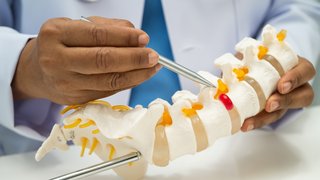
Ongoing back pain can have a major impact on your daily activities, sleep, and emotional well-being. Most of the time you can trace the source to nerve pressure somewhere along the spine. Lifestyle changes will sometimes relieve this pain, but for long-term issues, a doctor may need to intervene.
As a patient, you may face a dilemma. Should you go through extensive surgery, requiring weeks of recovery? Or should you start regular injections, which will ease the discomfort but only temporarily?
At UT Southwestern, patients have another choice – endoscopic spine surgery, a minimally invasive outpatient procedure that can correct the underlying issue and relieve the pain. This method also offers shorter recovery times than traditional surgery and comes with minimal risk.
Let’s review the kinds of conditions that can be treated with this procedure as well as the benefits of endoscopic spine surgery, how it works, and whether it might be right for you.
Conditions treated by endoscopic spine surgery
Endoscopic spine procedures can address some of the most common ailments that cause back pain:

- Radiculopathy or sciatica: This is caused by inflammation or compression along the spinal nerves.
- Spinal stenosis: This is when the spine narrows, putting pressure on the spinal cord or nerves.
- Herniated or bulging discs: A spinal disc ruptures outward, pushing on nearby nerves.
- Bone spurs: These occur when small growths develop on the edges of bones.
- Degenerative disc disease: This occurs when a disc begins to break down and push outward.
Endoscopic spine surgery can’t treat every back problem. For patients with certain conditions, however, it can be a game changer.
It effectively fills the gap between traditional surgery and nonsurgical treatments. That’s why UT Southwestern has invested in leading-edge tools and expertise to bring patients this life-altering option.
Diagnosing back pain
UTSW Spine Center
The UT Southwestern Spine Center uses a multidisciplinary team approach, giving patients access to neurosurgeons, orthopedic spine surgeons, pain management specialists, and physiatrists who can diagnose the source of a patient's back pain and recommend the best treatments.
Tackling back pain starts with a diagnosis. Certain types of pain can indicate different conditions and could be described as:
- Burning
- Dull and aching
- Sharp and stabbing
- Extending into the buttocks or upper leg
Depending on the severity of your issue, your pain could fall into one of two categories:
- Acute back pain, which usually lasts less than three weeks and heals on its own
- Chronic back pain, which lasts more than three months and may require medical intervention
It is best to seek medical attention if the pain has not improved after a few weeks. If you experience related symptoms, such as numbness, weakness, fever, trouble balancing, or bowel/bladder problems, that could indicate more serious conditions that need to be treated immediately.
“The benefit of endoscopy is that it isn’t much different from interventional procedures like epidurals from the patient’s perspective, but you are actually solving the underlying problem. It is the kind of solution that spine surgeons would want for themselves.”
Andrew Simpson, M.D., Chief of Spine Surgery and Director of the Spine Center at UT Southwestern
Common treatments for back pain

Understandably, patients often want relief from back pain as quickly as possible. However, many are still reluctant to undergo traditional surgery and the weeks of recovery that is usually requires. For conditions like nerve compression, for example, they can take medication, do physical therapy, or get steroid injections.
These treatments are all about managing symptoms. But none of them changes the underlying problem in their anatomy. Besides having their own side effects and recovery times, these are only temporary solutions. Patients must still return for the same procedure multiple times throughout the year.
To relieve a pinched nerve, you need to have a pathway into the body to make room for it. Often that pathway requires making a long incision and moving all the muscles aside. Minimally invasive surgery has evolved to allow the use of smaller, tubular-type retractors and a microscope. Endoscopy is the next version of the procedure, with an even smaller incision (roughly a quarter of an inch long) and the use of a tiny camera and tools to access and treat common spine problems.
Benefits of endoscopic spine surgery
With endoscopic spine surgery, patients undergo a procedure that takes about an hour and requires only slightly more recovery than an injection. It is a less disruptive approach that will repair the problem, not just mask it.

For qualified patients at UT Southwestern’s Spine Center, endoscopy presents many benefits over traditional surgery:
- Tiny incision (less than one centimeter)
- Reduced tissue damage
- Less pain
- Minimal chance of complications
- Lower infection risk
- Fast recovery
- No hospital stay
- Less scar tissue
- No fusion or implants
How the endoscopic procedure works
Endoscopic spine surgery starts with a small incision in a patient’s back where the issue is located. The surgeon then inserts an endoscope, a thin tube with a camera at the end. This tube acts as a channel for any specialized instruments needed to treat the problem, while also monitoring the area in real time with the camera. Afterward, the surgeon closes the incision and covers it with a small bandage.
Because this procedure produces the least amount of tissue damage, patients can see results right away and, in most cases, need to take pain medication for only a day or two. The medical center often releases patients on the same day to a friend or family member who can take them home – just like with injections. They can then return to their usual activities, though we may ask them to avoid any heavy lifting, twisting, or bending for several weeks afterward. From a patient’s perspective, the only difference between injections and endoscopic surgery is recovering from general anesthesia, which typically takes a few hours.
Is endoscopic spine surgery for you?
Some people may be fearful of surgery. This procedure provides an alternative solution that is more effective than an injection but far less invasive than traditional spine surgery. Endoscopic spine surgery won’t address all back pain issues, but for the right candidates, it could provide a long-term solution.
To learn whether endoscopic spine surgery is right for you, make an appointment by calling 214-645-2225 or request an appointment online.