Myasthenia gravis: What are the symptoms and how is it treated?
August 10, 2026

Quick links: Symptoms | Diagnosis | Treatments
Double vision. Facial drooping. Trouble speaking. Weakness in the arms and legs. At first glance, these are classic signs of a stroke.
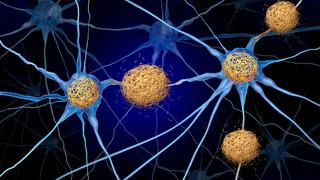
But they can also be the first indicators of myasthenia gravis (MG), a rare autoimmune neurological disorder that interferes with communication between nerves and muscles, causing muscle weakness that often worsens with activity. Other symptoms include relentless fatigue and problems with vision, swallowing, and breathing.
Anyone of any age can develop myasthenia gravis, though there are peaks of onset among women in their 20s-30s and men over age 60. Because it is such a rare disease – and because its symptoms mimic those of other neurological disorders – patients with myasthenia gravis may live with symptoms for months to even years before getting an accurate diagnosis.
The myasthenia gravis program at UT Southwestern brings together specialists in autoimmune diseases, including neurologists and neuro-ophthalmologists, to diagnose and treat this complex condition. With the right treatment plan, many patients can achieve minimal symptom expression and regain a higher quality of life. Getting there starts with a good understanding of what’s happening at the molecular level that we can control.
What causes myasthenia gravis?
Let’s get one common concern out of the way first: Nothing you did or didn’t do caused myasthenia gravis, and it is not yet preventable.
For some patients, symptoms are present from youth. Some people live symptom-free for many years before a viral illness such as influenza triggers the immune system to set off a cascade and lead to the symptoms of myasthenia gravis. For others, symptoms begin without an identifiable trigger.
People who have autoimmune diseases or a family history of them are more vulnerable to developing myasthenia gravis.
What are the symptoms of myasthenia gravis?
Symptoms of myasthenia gravis can be very different from person to person, often getting worse as the day goes on.

Ocular symptoms – problems with the eyes – are the hallmark of myasthenia gravis. Patients often report eye symptoms that fluctuate throughout the day, including:
- Drooping eyelids on one or both sides
- Double or blurred vision
- Worsening weakness in the eye muscles at the end of the day
Fatigue is another classic symptom. Many patients have described it as feeling as though their energy drains throughout the day. Other common symptoms of myasthenia gravis include:
- Changes in facial expression
- Weakened or drooping facial muscles
- Slurred speech or a lower volume voice
- Weakness of the arms and legs, especially the shoulders, upper arms, hips, and thighs
- Difficulty chewing or swallowing
- Shortness of breath, which can signal that breathing muscles are affected
Signs of MG mimic other conditions – in fact, it’s not uncommon for patients to be misdiagnosed as having a stroke or Bell’s palsy. While emergencies with MG are rare, it’s wise to see a doctor right away if you have difficulty breathing, trouble swallowing, sudden weakness, or signs that could indicate a stroke.
Related: Read "Steven Vernino, M.D., Ph.D. Answers Questions on Myasthenia Gravis"
How is myasthenia gravis diagnosed?
Myasthenia gravis is sometimes called the “snowflake disease” because every person’s experience is different. The touch points of their care are also different.
Patients may get care first in the emergency room, or they might be diagnosed after seeing an optometrist, an ophthalmologist, primary care physician, or neurologist. Some may have learned about MG online, and they may ask their primary care provider for a referral to a specialty center such as ours.
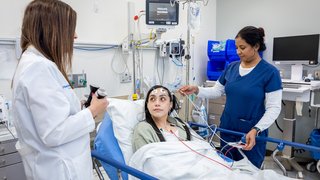
At UT Southwestern, the diagnostic process starts with a neurological exam. You will be asked about your symptoms, any triggers you may have noticed, and your family and personal history of autoimmune diseases. We will perform a standard neurological exam that includes strength testing of the eye, facial, truncal, and extremity muscles to investigate the pattern of weakness. After the history and physical exam, we proceed with stepwise testing to confirm or rule out a diagnosis of myasthenia gravis.

Blood antibody testing
We will run a blood panel to look for specific antibodies that are known to be associated with myasthenia gravis, including antibodies against acetylcholine receptors (AChR), muscle-specific kinase antibody (MuSK), and low-density lipoprotein receptor-related protein 4 (LRP4).
The results can help confirm the diagnosis, predict disease patterns, and guide treatment decisions. Test results may also identify signs of thymomas, which are cancers of the thymus gland.
Electrodiagnostic testing
If the blood tests do not provide a clear answer, specialized nerve and muscle tests can be performed to evaluate how effectively signals travel from nerves to muscles to help confirm a diagnosis.
CT scan for thymus involvement
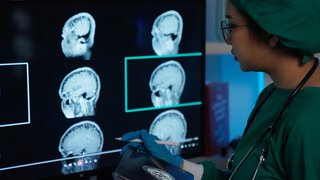
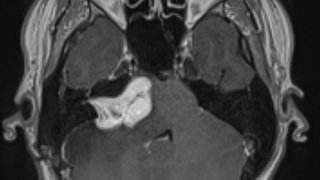
For every patient, a CT scan of the chest is performed to look for abnormalities of the thymus, an immune system gland that matures white blood cells.
About 15% of cases of myasthenia gravis are associated with thymomas (a tumor of the thymus gland), which is more common in older patients. Cases of myasthenia gravis associated with a thymoma tend to be more aggressive at the onset. Younger patients, particularly women, have a higher prevalence of thymic hyperplasia, which is enlargement of the thymus.
What are the treatment options for myasthenia gravis?
If you have a rare disease such as myasthenia gravis, getting care at an academic medical center such as UT Southwestern gives you more options. We have an excellent group of neuromuscular experts, each with specialized areas of expertise, who work together to create each patient’s care plan.
Standard symptomatic medication and physical therapy
The standard medication aimed at improving symptoms is Pyridostigmine, which blocks the enzyme that breaks down acetylcholine (ACh). This means more ACh will be present in the neuromuscular junction competing with the antibody, restoring the signal temporarily, helping to control muscle symptoms and reduce fatigue.
Personalized physical therapy can also help some patients manage fatigue with myasthenia gravis. Exercises focus on rebuilding endurance and strength. Research shows that such physical therapy programs can improve strength, function, and quality of life.

Immunotherapy
Immunotherapy remains the standard of care for treatment of myasthenia gravis, especially for generalized myasthenia gravis. Research suggests that initiation of immunotherapy can stop the conversion from ocular to generalized myasthenia gravis.
Some of the immunosuppressant medications used include prednisone (a common steroid medication), azathioprine, mycophenolate mofetil, tacrolimus, rituximab, and inebilizumab-cdon, a newer therapy approved by the Food and Drug Administration (FDA). Being on immunosuppressive medications long-term can help control the disease but can increase the risk of infections and certain malignancies. Long-term use of prednisone specifically can lead to several adverse effects, including weight gain, high blood pressure, elevated glucose levels, skin changes, bone density reduction, digestive problems, and other issues. Your doctor will work to reduce the steroid dose to the lowest dose possible with the goal of removing steroids from the treatment plan completely.
Targeted immunotherapy can reduce the production of autoantibodies as well as clear them from the body. Efgartigimod is a first-in-class targeted immunotherapy drug for myasthenia gravis. It was approved by the FDA in 2021 for generalized, ACh-positive MG. Its development was made possible through research led by Sally Ward, Ph.D., during her time at UT Southwestern.
Efgartigimod is an engineered fragment of a human antibody that binds to the neonatal Fc receptor on the surface of cells (an FcRn inhibitor drug). It helps control levels of proteins called immunoglobulin G, the most common type of antibody found in blood. Since 2021, three more FcRn inhibitors have been FDA-approved for generalized MG: efgartigimod alfa and hyaluronidase-qvfc, rozanolixizumab, and nipocalimab.
Plasma exchange
Therapeutic plasma exchange, or plasmapheresis, removes the blood plasma that is carrying autoantibodies and gradually replenishes it with healthy blood plasma.
Small amounts of your blood are removed through an IV and fed into a machine that separates your blood into its parts: white blood cells, red blood cells, platelets, and plasma. The plasma is removed, replaced by a plasma substitute, and returned to your blood vessels with the other components.
Plasma exchange is safe and effective. You may require several treatments before your symptoms improve.
Future treatments through clinical trials
Participating in a clinical trial offers patients access to some of the latest scientific breakthroughs while also providing valuable information to develop new therapies.
UT Southwestern has been a recruiting site for many of the emerging therapies for myasthenia gravis. We are currently enrolling patients in two active clinical trials to investigate:
- CAR T-cell therapy, which researchers think may one day provide long-lasting disease control by resetting parts of immune system.
- Telitacicept, a B-cell targeting therapy, which helps reduce provide a sustained improvement in myasthenia gravis symptoms and reduce the need for steroids
Although myasthenia gravis is a chronic condition, advances in diagnosis and treatment are helping people manage symptoms more effectively than ever before. Early evaluation and a personalized treatment plan can help patients maintain independence, reduce the risks of serious complications, and improve their quality of life.
To talk with an expert about myasthenia gravis, make an appointment by calling 214-645-8800 or request an appointment online.