By Jaya Trivedi, M.D., Professor of Neurology
and Christopher Donnelly, Ph.D., Associate Professor of Neurology

In 2026, actor Eric Dane died at age 53 of complications from amyotrophic lateral sclerosis (ALS). Retired NFL running back Chris Johnson, formerly of the Tennessee Titans, was diagnosed with ALS in 2025 at 39.
When you hear about a younger person developing ALS, it can be shocking. There has been a misperception that ALS is an older person’s illness, but the average age of diagnosis is 55 – right in the prime of life. Also called Lou Gehrig’s disease, it is named for a professional baseball player who was diagnosed with ALS on his 36th birthday.
Scientific research and changes in visibility are breaking through the myths surrounding the disease. While it may seem like younger adults are developing ALS more often, the reality is more nuanced.

Today, younger people with ALS are more present in public spaces about the disease. Dane, for example, participated in media interviews and shared his experiences with ALS on social media. Awareness campaigns such as the ice bucket challenge and the formation of patient advocacy groups for people with ALS have made their experiences far more visible than they once were.
At the same time, advances in genetics and research are helping us better understand ALS, including young-onset ALS. Researchers have identified dozens of genes associated with the disease, and ongoing biomarker research offers the possibility that patients could someday be identified prior to disease onset or earlier in the disease process.
This deeper understanding has changed how specialists in the ALS and Muscular Dystrophy Multidisciplinary Clinic at UT Southwestern think about the disease and has improved our ability to identify it. As researchers develop therapies that target specific forms of ALS, earlier identification may create more opportunities for patients to benefit from emerging treatments.
What is ALS?
ALS is a progressive, neurodegenerative disease that affects motor neurons, the nerve cells responsible for controlling voluntary muscle movement. ALS makes these neurons stop working and, over time, the muscles weaken and lose function.
Symptoms of ALS are different for each person. Early in the disease, painless muscle weakness can be a sign. Other early indications include:
- Difficulty walking
- Dropping things
- Weakness in the arms or legs
- Slow or slurred speech
- Difficulty swallowing
- Twitching or cramping muscles
- Uncontrollable laughing or crying

Over time, many patients develop difficulty breathing.
About 5,000 people in the U.S. are diagnosed with ALS each year. On average, someone with ALS lives about three years after diagnosis, but some live longer. While Dane lived about two years after his diagnosis, astrophysicist Stephen Hawking lived 55 years.
Most of the time, ALS occurs without a known genetic cause. About 10%-15% of cases are associated with genetic changes that can be inherited.
What is young-onset ALS?
While definitions vary, young-onset ALS is a general term for when the disease is diagnosed before age 45, representing only about 10% of people with ALS.
One of these individuals is Michael Ibarra, M.D., a former neurologist at UT Southwestern who was diagnosed with ALS at age 30. Dr. Ibarra has given presentations and speeches about his experiences with ALS. He also has participated in a clinical study to treat the disease, with a goal of advancing research to improve outcomes for patients with ALS.
How can ALS affect younger adults differently?
ALS resource and research groups
Learn more about ALS, resources, and research news through these organizations:
ALS Therapy Development Institute
While ALS is devastating at any age, young adults often face a very different set of circumstances from those diagnosed later in life. Many younger patients are still building careers, raising children, and taking care of aging parents.
Along with the physical symptoms, an ALS diagnosis creates a roller coaster of emotions, including:
- Loss of employment or reduced ability to work
- Financial pressures and family responsibilities
- Concerns about raising children
- Grief over disruption of the life they had planned
Research suggests that, on average, younger patients may experience somewhat slower disease progression and longer survival than those diagnosed later in life. Every patient’s experience is different, and genetics can influence how quickly the disease progresses.
How is ALS diagnosed?
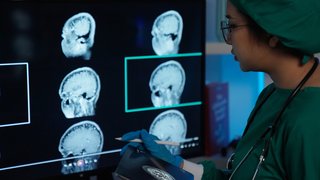
No single test can tell us whether someone has ALS; its early symptoms may resemble other neurological conditions. Instead, we rely on recognizing patterns across symptoms, the findings on physical examination, and electrodiagnostic results.
The process usually includes:
- A detailed medical history
- A neurological examination
- Electromyography (EMG) and nerve conduction studies
- Imaging studies and laboratory testing to rule out other conditions
This process takes time and involves ruling out a number of other neurological conditions. Getting an accurate diagnosis is essential for making informed decisions about treatment and connecting families with resources and support.
What treatments are available for ALS?

While there is not yet a cure for ALS, several therapies have been approved by the Food and Drug Administration that focus on:
- Slowing progression of the disease when possible (riluzole, edaravone)
- Medications such as tofersen to target genetic forms of the disease (this drug is for a very rare form of familial ALS with a mutation in the SOD1 gene)
- Managing symptoms (nuedexta)
Supportive care can include management of mobility needs, problems related to speech, swallowing, and breathing, as well as muscle stiffness, excessive saliva, and challenges that affect daily life.
As ALS progresses, nutrition becomes even more important. Difficulty chewing or swallowing can make it challenging to get the calories and fluids the body needs, and studies have shown that people with ALS require more calories. Patients often benefit from working with their neurologists, registered dietitians, and speech-language pathologists to plan strategies to support safe swallowing as well as supplemental nutrition via a feeding tube.
One of the most important advances in ALS care is the team-based clinic model. Our ALS specialist team includes neuromuscular neurologists, a neuropalliative neurologist, physical and occupational therapists, a speech pathologist, respiratory therapist, social worker, dietitian, counselor, nurse, equipment specialist, and research coordinator.
This team-based approach helps patients get comprehensive, coordinated care while also addressing emotional and practical concerns. Our goal is to help patients preserve independence, comfort, dignity, and quality of life while supporting the people who care for them.
Research is creating real hope
Scientists understand far more about ALS than even 10 years ago. One major area of progress involves the genetic forms of the disease. Researchers are developing therapies that target specific genetic mutations. These advances have demonstrated that it’s possible to directly address some of the biological processes that drive certain forms of ALS.
Researchers are developing therapies that target specific genetic mutations and identifying biomarkers that may help researchers understand whether a treatment is affecting ALS, sometimes before changes become obvious in a patient’s symptoms.
As researchers continued to monitor these patients, some groups experienced slower disease progression or greater stability than expected. These findings suggest targeted therapies may be able to change the course of the disease in ways that aren’t obvious right away, highlighting the importance of long-term research.
Biomarkers are another exciting area of ALS research. These measurable indicators may help researchers understand whether a treatment is affecting the disease, sometimes before changes become obvious in a patient’s symptoms. Scientists are also studying how biomarkers could one day help identify disease activity earlier and assist in developing therapies.
The conversation around younger adults with ALS is an important opportunity to increase awareness and improve understanding. That greater visibility can help connect more people with the specialized care and support they need sooner.
If you’re experiencing symptoms such as muscle weakness, speech changes, or difficulty swallowing, getting an evaluation by an experienced neuromuscular team can open the door to timely diagnosis and comprehensive care.
To talk with an expert about ALS, make an appointment by calling 214-645-8800 or request an appointment online.