

Find a Clinical Trial
Search for opportunities to participate in a clinical research study.
New Patient Appointment or 214-645-2353
The plastic surgeons at UT Southwestern Medical Center are not only trained in the latest cosmetic breast surgery innovations, but are also developing them here in Dallas and Frisco.
Patients can count on us for effective breast surgery solutions to change the size and shape of their breasts. Additionally, UTSW plastic surgeons have pioneered innovative breast reconstruction surgery for cancer patients.
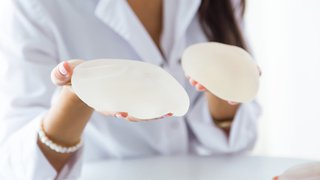
Cosmetic breast surgery includes procedures that enhance or modify the appearance of the breasts. These may involve breast augmentation, breast reduction, breast lift (mastopexy), or a combination of these techniques. Whether a patient’s goal is to enhance, reduce, or restore, we offer personalized cosmetic breast surgery to help achieve it.
The plastic surgery team at UT Southwestern offers the following cosmetic breast plastic surgery procedures:
We also offer leading-edge breast reconstruction procedures.
UT Southwestern is at the forefront of innovations in breast surgery procedures, including research on implant safety and effectiveness, development of new surgical techniques, and the use of 3D technology to guide patient care.
Our surgeons have completed extensive training in plastic surgery, including 6 to 9 additional years of specialized education after medical school. They are board-certified by the American Board of Plastic Surgery.
UTSW plastic surgeons have authored thousands of scientific publications. We conduct extensive research on new technology, materials, and breast surgery techniques. As part of the only academic medical center in North Texas, we also teach the next generation of plastic surgeons, as well as experienced providers, about procedures and innovations in cosmetic and reconstructive surgery.
Of the 1% of women who experience complications after having breast implants, an even smaller number develop a series of nonspecific and somewhat vague symptoms collectively known as breast implant illness (BII).
If any of our patients experience problems with breast implants or suspect having BII, our UTSW plastic surgery team is available to evaluate and manage their concerns.
On March 23, 2017, the U.S. Food and Drug Administration (FDA) issued a press release regarding a rare disorder linked to breast implants: breast implant-associated anaplastic large cell lymphoma (BIA-ALCL), a type of non-Hodgkin lymphoma.
Here’s what patients need to know:
In summary:
Patients with questions or concerns are encouraged to contact their plastic surgeon. Our team is always happy to help.
Search for opportunities to participate in a clinical research study.
We’re one of the world’s top academic medical centers, with a unique legacy of innovation in patient care and scientific discovery.