Thriving after stage 4 colon cancer: Complex treatment gives Texas mom a healthier future
November 11, 2026


When Jyoti Joseph looks back on the summer of 2024, she sees patterns of threes.
She was navigating a difficult divorce and moving to a new home with her two sons, ages 2 and 6. That was also when she received a diagnosis no woman in her early 40s expects to hear: stage 4 colorectal cancer with peritoneal metastases.
The cancer was aggressive, having already spread to the peritoneal cavity – the lining of the abdomen. While colorectal cancer commonly spreads to the lungs or the liver, peritoneal involvement is particularly challenging to treat with traditional methods.
“Everything changed,” Ms. Joseph said. "The stats were not in my favor, but I knew I would be an outlier. The diagnosis didn’t even make sense. I had been healthy my entire life, running marathons and choosing a clean diet. But I decided early on that how I reacted mattered more than the diagnosis itself."
Then came another life-changing set of threes – this time, bringing hope:
- An experienced surgeon had joined UT Southwestern that same summer, creating an opportunity for care close to home.
- He brought expertise in cytoreductive surgery with hyperthermic intraperitoneal chemotherapy (CRS-HIPEC), which few centers perform at scale.
- This research-driven cancer program offered not only treatment but also possibility.

UT Southwestern was the first hospital in North Texas to offer this regional abdominal treatment for patients with resectable cancers that have spread to the peritoneum.
The surgical oncology program at Harold C. Simmons Comprehensive Cancer Center, led by surgeon Alex Kim, M.D., Ph.D., has rapidly grown into one of the world’s highest-volume centers for the procedure.
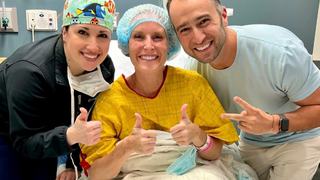
Receiving the CRS-HIPEC treatment, along with expert follow-up care and Ms. Joseph’s never-give-up attitude, transformed a cancer that would have been fatal into a controllable chronic condition. As of fall 2026, Ms. Joseph has no detectable circulating tumor DNA. She’s working, raising her sons, lifting weights, and taking vacations.
She’s not just surviving. She’s thriving.
Symptoms that were easy to miss
Ms. Joseph’s diagnosis reflects a troubling national trend. Colorectal cancer is rising among adults under age 50 who historically would not have been considered high risk.
Like many younger patients diagnosed with colorectal cancer, Ms. Joseph initially attributed the subtle symptoms of the disease to being a busy working parent. Constant fatigue, bloating, and abdominal fullness were easy to attribute to postpartum changes and stress.
“Those symptoms, now that I look back, were cancer symptoms,” she said. “But being a new mom of two, I just chalked it up to that and didn’t get it checked.”
Because the symptoms can be vague and overlap with other conditions, people with colon cancer often don’t get diagnosed until the disease has progressed. Common symptoms of colon cancer include:
- Persistent bloating
- Changes in bowel habits
- Abdominal discomfort
- Fatigue
- Rectal bleeding
- Unexplained weight changes
When her abdomen began swelling rapidly, Ms. Joseph sought help. Doctors at another healthcare center discovered a large fluid buildup that led to her devastating diagnosis in August 2024: stage 4 colon cancer with peritoneal metastases.
“Colorectal cancer most commonly spreads to three places: the liver, lungs, and peritoneal cavity,” said Dr. Kim, a surgeon who specializes in complex gastrointestinal oncology. “The peritoneal cavity unfortunately carries the worst prognosis. It behaves differently biologically, and treatment options have been limited.”
When cancer cells spread from other organs (in Ms. Joseph’s case, the colon), they can attach to the peritoneum, which is the lining of the abdomen. With its strong blood supply and large surface area, the peritoneum is fertile ground for cancer cells to rapidly multiply.

Searching for hope through surgery
Immediately after diagnosis, Ms. Joseph began 12 rounds of chemotherapy at another hospital. Though this stabilized her condition, the tumors weren’t shrinking. She knew she needed surgery to remove the tumors for a chance at long-term survival, but as she researched options, she kept running into the same problem.
“I looked online and found specialized cancer centers in San Diego, on the East Coast, in Florida. But when I looked for peritoneal metastases within colon cancer, I found a lot of obituaries,” she said. “I kept coming on dead ends.”
She met with surgeons at several respected institutions. Repeatedly, she heard versions of the same message: “Surgery is out of the question.”
Removing tiny peritoneal tumors with CRS is complex due to the low visibility in the abdomen as well as the risk of damaging delicate nearby organs such as the ovaries, bladder, and bowels. One surgeon she met had performed only a handful of cytoreductive surgeries. Other centers recommended indefinite systemic chemotherapy. Few centers in the world, she learned, have the depth of experience needed to safely perform CRS.
"I was devastated by the lack of surgical options," Ms. Joseph says. "But I have a pretty intense job where emotions and stakes get high. I know how to advocate for myself. I wasn't looking for the end; I was looking for a path forward.”
A friend searched the National Cancer Institute (NCI) website and found Dr. Kim, who had recently relocated his nationally recognized peritoneal surface malignancy program to UT Southwestern. When Ms. Joseph met Dr. Kim in February 2025, she found what she had been seeking: candor and a plan.
"Dr. Kim is the smartest person I have ever met," Ms. Joseph says. "He laid out the treatment plan with total transparency. His research-driven approach gave me so much peace. He told me exactly how hard it would be, and I appreciated that.”
The 'mother of all surgeries'
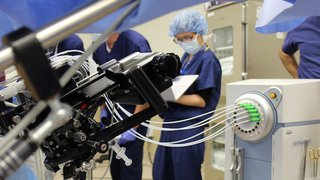
CRS-HIPEC is among the most technically demanding procedures in surgical oncology. While safe and effective, this is a major procedure that can last 12 hours or more and may involve surgery on several organs.
“When we perform surgery for someone for a colon cancer that hasn't spread, we remove a portion of the colon, which is considered a major operation,” Dr. Kim says. “For patients like Ms. Joseph, who had multiple organs involved, we’re performing several major surgeries at once.”
CRS-HIPEC is a two-stage approach:
- Cytoreductive surgery (CRS): The surgeon removes all tumor nodules from the abdominal cavity that can be seen or felt. This may involve removing portions of the intestine or other organs where the cancer has seeded.
- Hyperthermic intraperitoneal chemotherapy (HIPEC): Once the visible tumors are gone, the abdominal cavity is bathed in a heated chemotherapy solution for 100 minutes. The heat helps the chemotherapy penetrate deeper into tissues to destroy any remaining microscopic cancer cells that a surgeon cannot see. And by exposing the chemotherapy solution directly into the abdominal cavity rather than having it circulate throughout the bloodstream, the drug is confined to that area and typically causes fewer side effects.
"Because of its complexity and duration, this procedure has historically been called the 'mother of all surgeries,'" Dr. Kim explains. "At our high-volume center at UT Southwestern, we’ve refined the process to make it safer and more effective for patients who previously had very few options."
UT Southwestern has the depth of experience needed to safely perform CRS-HIPEC. Dr. Kim and his team perform 80-90 procedures a year, whereas some centers may perform just 2-3 annually.
“To be an expert center for cytoreductive surgery with HIPEC, you need certain pillars — high patient volume, excellent outcomes, clinical trials, translational research, and a strong commitment from your institution. That’s why UT Southwestern is a model institution for this therapy. We have to keep innovating. Patients deserve more options.”
Alex Kim, M.D., Ph.D.
Who is eligible for CRS-HIPEC?
CRS-HIPEC is a one-time treatment available for patients with advanced appendiceal, colorectal, gastric, gynecologic, or mesothelial cancer that has spread to the peritoneum. The combination procedure can offer select patients significantly better outcomes compared with systemic therapy alone. Expert evaluation is key to choosing the best treatment option.
At UT Southwestern, each patient’s cancer care plan is designed by a gastrointestinal tumor board that brings specialists together to review treatment options. This structure is essential for determining whether a patient may benefit from surgery and customizing their chemotherapy, surveillance, and supportive care after a patient goes home.
Beyond imaging scans, candidacy involves a discussion with the patient about how well they can tolerate a lengthy operation and the demanding recovery. For the best outcomes, a patient must commit to lifestyle changes associated with nutrition, exercise, and long-term follow-up appointments with the care team.
Day in the life: Surgical oncologist Alex Kim, M.D., Ph.D., Assistant Professor of Surgery at UT Southwestern Medical Center, specializes in cytoreductive surgery with hyperthermic intraperitoneal chemotherapy (CRS-HIPEC), a treatment for some patients with resectable cancers that have spread to the peritoneum (watch on Instagram).
Life after CRS-HIPEC: recovery and resolve
New therapy for abdominal cancer
Pressurized intraperitoneal aerosol chemotherapy (PIPAC) is the latest innovation in peritoneal cancer. PIPAC is reserved for patients with inoperable cancer with peritoneal lesions who have no other treatment options.
Considered a minimally invasive laparoscopic procedure, PIPAC delivers a mist of pressurized chemotherapy into the abdomen. No cancerous tissues are surgically removed during PIPAC. The therapy is meant to alleviate symptoms, such as fluid buildup, and in some cases may slow or stop the spread of cancer cells. It is not a curative treatment.
PIPAC is available at UT Southwestern to help manage symptoms, reduce the risk of further spread of cancer cells, and extend patients' lives while improving their quality of life.
Dr. Kim performed Ms. Joseph’s surgery on April 16, 2025, successfully removing the visible tumors and completing the HIPEC treatment. While the national average for a hospital stay following HIPEC is often two weeks or more, UT Southwestern has streamlined recovery protocols that often allow patients to return home in six to seven days.
For Ms. Joseph, recovery wasn’t just about rebuilding strength; it was about restoring the routine at home with her little boys.
“When I was recovering from surgery, I physically was not strong,” she said. “I would say to the boys, ‘Hey, let’s go for a walk — you’re helping me heal.’”
After CRS-HIPEC, patients will need several months to regain strength, endurance, and regular activities. Pain and discomfort are expected, yet manageable with medication and rest. Having a strong support system of friends, loved ones, and a care team that checks up on you is essential to healthy recovery. Dr. Kim suggests connecting with national patient advocacy groups such as ColonTown and PMP Pals for peer support and reliable information throughout recovery and beyond.
Since her surgery, Ms. Joseph has had one small recurrence that required additional chemotherapy. She has also taken maintenance chemo and has regular imaging scans to watch for signs of returning cancer. Today, she compares living with stage 4 cancer as similar to managing a chronic disease.
“It’s like fighting an ant versus an elephant,” she said. “I live with stage 4 cancer like someone might live with high blood pressure or diabetes. You manage it with medications, scans, treatment as needed, and lifestyle changes. You stay vigilant. You keep living.”
Related: Read “Cancer rehab helps patients survive and thrive”
Cancer innovations backed by research
For Dr. Kim, surgery is only one part of the story. He often describes his work as wearing three hats: one for clinical care, one for clinical trials, and one for translational research. His laboratory research focuses specifically on the biology of peritoneal metastases – why these cancers behave differently and how treatment can improve.
“What we’re seeing in the lab is that a peritoneal metastasis is completely different in comparison to one of the lung or the liver,” Dr. Kim said. “Because of that, its response to the current standard therapy is very poor.”
Dr. Kim is leading an NCI-funded, investigator-initiated phase one clinical trial for patients with unresectable colorectal cancer peritoneal metastases, who represent less than 10% of patients with advanced metastatic cancer. The approach is a form of regional therapy: delivering chemotherapy directly into the peritoneal cavity between the muscles and organs rather than through an IV, aiming to reach tumors in a space where standard treatments may fall short.
A second clinical trial will focus on patients with gastric cancer-associated peritoneal metastases, reflecting the program’s broader commitment to advancing options for diseases long considered to have few treatments.

‘Live the life you’re fighting for’
Ms. Joseph says having cancer sharpened her focus on life. She measures life differently now. More presence, less noise, more ordinary joy. She leans into her spirituality and her church community. She lifts weights to feel strong, prioritizes time with her sons, and refuses to organize her life around worst-case thinking.
For those newly diagnosed with stage 4 cancer, Ms. Joseph offers a positive perspective:
- Seek an expert opinion: "Don't accept the status quo. There is someone out there who specializes in your cancer. Find a team that is research driven and stay off the internet, or at least be intentional about the sources you trust.”
- Control the variables: "You can’t control the diagnosis, but you can control your nutrition, your mindset, and who you surround yourself with."
- Keep your perspective: "I lead by faith. Once you believe you are going to be the outlier, that becomes your reality. Don't look for the end; look for acceptance and peace."
Her bottom line is simple and practical: Live the life you’re fighting for. Ms. Joseph embodies this outlook by staying connected to the people who help her feel steady.
Dr. Kim says that mindset often matters more than people realize. “With advanced cancer, hope has to be matched with expertise,” he said. “That’s what we try to provide.”
In Ms. Joseph’s story, the hard challenges were met with breakthroughs: a friend who knew where to look, a surgeon with deep expertise who had just brought his program to UT Southwestern near where she lives, and a highly specialized procedure that can give eligible patients a meaningful chance at long-term disease control. Today, she’s focused on what comes next — living fully and taking each scan as one more step forward.
"Most of all, I hold my kids and know that I need to be here to raise them," she says. "UT Southwestern didn't just give me a surgery. They gave me the ability to plan a future."
To talk with an expert about cytoreductive surgery with HIPEC, make an appointment by calling 214-645-4673 or request an appointment online.