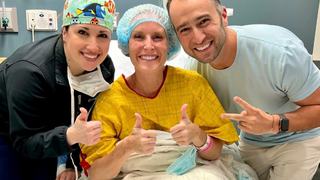
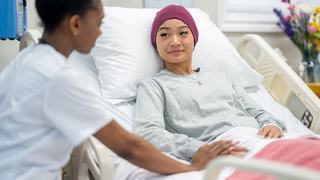
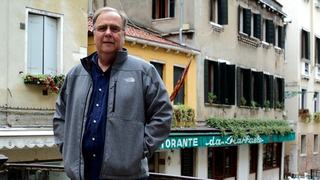
Picture yourself sitting down to order your favorite meal at a restaurant. But when your waiter comes by, he announces that the menu has been condensed to just three items tailored to appeal to the broadest range of customers’ palates. And you can only get one item at a time: a drink, followed by an entrée, then a side dish.
This might appeal to some people, but it would not be a good dining experience for everyone. In many healthcare settings, this is how modern cancer care is delivered.
Cancer treatment plans often are designed for single cancers that arise frequently in the general population, using standard therapies that are known to work for the most common variations of that cancer.
While this approach can be effective for people whose cancers fit the "average" mold, sticking with the standard of care doesn’t work – and can sometimes cause more harm – for patients with unique health situations:
- People with two or more unrelated types of cancer at once
- Those with progression after standard therapy or rare cancer cell mutations
- Individuals who were already very sick prior to getting cancer

These patients, who represent more of the population than many people realize, need a more customized approach to cancer treatment.
The UT Southwestern Harold C. Simmons Comprehensive Cancer Center is uniquely positioned to provide this type of whole-person care. We bring a three-pronged approach to cancer care:
- Innovative research
- Clinical specialization
- A team mindset that rallies all these experts around each patient from diagnosis through cancer survivorship
With this expertise, we can mix, match, and modify our menu of cancer treatments to align with the care you need and the speed to achieve your treatment goals. The first step toward giving you whole-patient care is to get to know you as not only a patient, but also as a person with a full, engaging life that cancer has disrupted.
What does ‘whole-person care’ really mean?
Nobody is defined as just one thing. You may be a parent, a grandparent, a businessperson. You may be an exercise enthusiast or more sedentary, or someone who grew up wealthy or in a lower-income family. The combinations are endless, and the same is true for cancer diagnoses.
If you have lung cancer, for example, you should see a lung cancer specialist. People with prostate cancer see a prostate cancer specialist. But who takes care of the patients who have two cancers at once?
Trying to treat each cancer separately leads to unnecessary delays. If it takes weeks or months to get appointments with each specialist, the cancers have more time to worsen, spread, and even become fatal.
UT Southwestern takes a different approach to these complex cases. We practice whole-patient cancer care, which means that in addition to medical tests, we intentionally explore what comprises who you are as a person.

Questions to help shape your care plan
As part of our approach to whole-patient cancer care, we’ll ask questions during your visits that may not seem directly correlated with cancer treatment but can influence your risk profile and care plan:
- Where did you grow up?
- Where do you currently live?
- What type of work do you do?
- Are you the primary family caregiver, and do you have a solid support network?
- Have you had prior surgeries or injuries in this area of the body?
- Have you ever been told you have a chronic illness, such as heart disease, diabetes, or a thyroid condition?
- Where do you see yourself in five years, if health or money weren’t an obstacle?
Building on this base of understanding, we bring in a high-impact team of experts to plan your care. This group is called the tumor board, and it includes specialists in all types of oncology as well as in pathology, radiology, clinical research, cardiology, endocrinology, and beyond. We then collate our expertise into a customized, streamlined action plan to cover your holistic health needs.
In some cases, this means tapping into cutting-edge clinical trials, which can give patients access to innovative treatments that may not be available anywhere else. For some patients, a clinical trial offers an option when standard therapies are no longer effective; for others, it provides an opportunity to receive tomorrow’s treatments today.
Two cancers, one lifesaving treatment combination
In 2025, a patient at a different hospital had been diagnosed with two simultaneous cancers – colon cancer and prostate cancer – one or both of which had begun to spread to his lungs and liver. This older man had significant symptoms along with several other health conditions including diabetes, a weakened heart, and high blood pressure.
Over two months, the previous care team planned the patient’s care while his condition declined. He was hospitalized several times and had started chemotherapy but only for his colon cancer.
When the patient came to us for another opinion, radiologists noted over 100 lesions in his lungs. For reference, just one or two lesions can be fatal. Surgery was not an option due to his health, and it wasn’t clear whether the lesions were from the colon cancer or the prostate cancer.
Our gastroenterology cancer and genitourinary cancer teams joined forces to examine the cancer at the molecular level:
- Pathological morphology: Assessing the size, shape, and structure of the tumors and cancer cells.
- Immunohistochemistry: Using special dyes and enzymes and advanced microscopes to highlight specific proteins in the tumor samples to precisely target those tumors.
- Molecular profiling: Identifying specific biomarkers (changes) in the DNA or RNA of a tumor to determine what is driving its growth.
Based on the findings of these tests and the patient’s personal history, our teams jointly recommended a specific chemotherapy combination that would be gentle on his delicate health while also reducing his cancer burden.
Had we tried to take on each cancer separately with the intense, standard chemotherapy treatments, the patient likely would not have survived. But because we addressed his care from a whole-patient perspective, he is not only alive but also thriving. When we spoke last, he had returned from a six-month international trip to visit family.
Long after a cancer diagnosis and treatment, people often face multiple challenges. Jue Wang, M.D., Professor of Internal Medicine in the Division of Hematology and Oncology, offers some ways that oncologists can improve survivorship care after cancer.
How tumor boards save lives
This team approach is the “science behind the miracle” of cancer care. Specialists in pathology, radiology, gerontology, nutrition, cardiology, and surgical, medical, and radiation oncology – just to name a few – convene to discuss every aspect of a patient’s care.
Ego has no place in our team – we hold objective discussions in service of our patients. From diagnosis through recovery, the tumor board convenes regular meetings to adjust, refine, and optimize the care plan as the patient’s cancer and overall health evolve.
Our responsibility as a team is not only to treat cancer but also to restore the person’s wellness. We anticipate not only how to bring a remission of the disease but also how each treatment choice will shape life after cancer: physical function, cognitive health, cardiovascular risk, and quality of life.
We align treatment with what matters most to the patient, recognizing that outcomes are not defined solely by survival but also by the ability to live fully afterward. Every nuance is examined because the decisions we make can shape a patient’s life now and in the future. Even when timelines are urgent, those decisions are grounded in data, experience, and multidisciplinary judgment.
At an academic cancer center such as UTSW, we do not have to wait weeks for scattered opinions, delayed referrals, or fragmented information. We have the expertise, the collaboration, and the resources to move with speed and confidence.
Western medicine meets Eastern philosophy
In Eastern medicine, there is a saying that treating the disease is only a small part of a doctor’s job; the bulk of the work involves understanding the patient. We take this to heart at UT Southwestern.
For the past two decades, much of our work in patient care, education, and research has taken place not just within the hospital but also in the communities where our patients live and work. When we meet people in their own environments, we begin to understand the full context of their lives — their culture, their support systems, their challenges, and their priorities. And in those moments, patients see that our care for them extends beyond the walls of the clinic. This connection fundamentally shapes how we practice medicine.
The most meaningful care emerges when we integrate scientific evidence with the lived experiences of our patients and communities.
Whenever possible, our goal is to select the least invasive, most effective treatment for cancer. Deep research, technological advancements, and open communication with patients allows us to move beyond a one-size-fits-all approach and toward truly personalized care.
Listening is key
When patients who have had health challenges before their cancer diagnosis first come to us, some are understandably wary – especially if they felt dismissed, silenced, or set aside by a previous provider.
But when they see that we “walk the walk” with whole-patient care, they often feel relieved. Expertise, combined with compassion, can bring comfort to a patient who may feel as if everything else is out of their control.
Not all cancers are straightforward or standalone, and the standard treatment menu does not always deliver the desired results. Work with a team that listens to you and sees the complete person, beyond the numbers and charts. Because with cancer care, decisions matter. Timing matters. There are no do-overs, and complex diseases won’t wait for separate treatment plans.
Patients deserve a unified, thoughtful approach – one that meets the urgency of the disease with the depth of understanding of the person.
To talk with an expert about comprehensive cancer care, make an appointment by calling 214-645-4673 or request an appointment online.