Find a Clinical Trial
Search for opportunities to participate in a vision or eye-related research study.
New Patient Appointment or 214-645-2027
At UT Southwestern’s Laser Center for Vision Care, our nationally recognized ophthalmologists have one goal: to improve patients’ quality of life by helping them see without glasses or contacts. LASIK eye surgery is just one of our specialties and is part of a comprehensive vision care program designed to preserve healthy eyesight and prevent blindness.
To find out whether LASIK is a good option, please sign up for one of our complimentary consultations. We also offer discounts to first responders, teachers, and active and retired military personnel.
LASIK stands for laser-assisted in situ keratomileusis. It’s a type of outpatient eye surgery that reshapes the cornea (the clear layer of tissue covering the front of the eye) to correct vision problems and reduce the need for eyeglasses or contact lenses for clear vision.
At UT Southwestern's Laser Center for Vision Care, patients receive specialized treatment at one of the most accomplished and comprehensive vision facilities of its kind. As an academic medical center, we provide eye surgery that reflects years of research, clinical experience, and ongoing learning.
Depth of experience matters. Our surgeons see a high volume of patients with a range of eye types and conditions, which helps them recognize small differences that can affect outcomes. Our extensive experience means we recommend LASIK carefully, using it only on patients who are the most likely to achieve excellent results.
UT Southwestern uses advanced scanning technology that allows surgeons to design one of the most personalized LASIK treatment plans available today. This upgraded system maps how light travels through the entire eye – not just the cornea – capturing detailed information about eye shape and visual patterns.
Using these measurements, our surgeons create a precise 3D model of the eye and simulate treatment before surgery. This planning process:
UT Southwestern is currently the only medical center in Texas offering this level of personalized LASIK planning.
LASIK surgeries are performed in a newly updated, comprehensive suite that brings the latest laser and imaging systems together in one dedicated space. The suite is designed for all-laser LASIK, meaning no blades are used to create the corneal flap. Having advanced laser and imaging technology in one room helps make the procedure more precise and efficient.
UT Southwestern is an academic medical center, which means patient care, research, and physician training happen in the same place. Our LASIK care is guided by ongoing studies and close tracking of results.
Our doctors have published more LASIK eye surgery outcomes research than any other eye specialists in North Texas. They also participate in clinical trials to evaluate procedures and technology and teach other physicians how to perform LASIK procedures. By studying results over time and training the next generation of eye surgeons, our team continues to refine techniques and apply new insights directly to patient care.
Together, this experience-, technology-, and research-driven approach allows us to recommend LASIK carefully and perform it with precision.
With normal vision, light enters the eye through the cornea and lens, which work together to bend the rays and focus them on the retina (the layer of light-sensitive cells at the back of the eye). The retina converts light into electrical pulses, which travel through the optic nerve to the brain to produce images. Refractive errors occur when the shape of the eyeball prevents the cornea and lens from properly refracting (bending) light rays.
LASIK eye surgery can help people who wear glasses or contact lenses by using lasers to correct common vision problems, also known as refractive errors. These problems include:
Good candidates for LASIK are adults with a consistent glasses or contact lens prescription and healthy eyes, including adequate corneal thickness.
People with certain conditions, such as significant dry eye, keratoconus or other corneal disease, uncontrolled autoimmune disease, or recent prescription changes due to hormones or medications, may not be good candidates. Pregnancy, nursing, or certain systemic conditions and medicines may also affect a person’s eligibility.
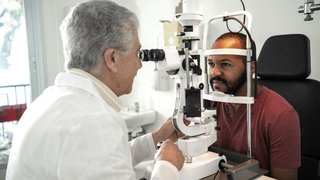
During the evaluation, our surgeons perform comprehensive measurements of the eye, including advanced light-based scanning. These detailed assessments help determine not only whether someone is a good candidate for LASIK but also which planning approach is most appropriate for each eye.
All laser eye surgeries, including LASIK, reshape the cornea so that images properly focus on the retina. We’ll discuss with patients which procedure is best suited to the unique contour of their eyes.
When LASIK isn’t the best match, patients have other options at UT Southwestern, such as:
LASIK gives many patients the ability to see clearly without constant dependence on glasses or contact lenses. Satisfaction rates are consistently high, with most patients reporting a better quality of life after surgery.
Key advantages of LASIK include:
The potential risks of LASIK include:
Although LASIK cannot prevent age-related vision changes such as presbyopia, it can provide long-lasting improvements in vision and significantly reduce reliance on corrective lenses.
Our doctors begin by evaluating patients to ensure they’re good candidates for LASIK. Patients who wear contacts usually need to stop wearing them and wear only glasses for several days or weeks before the evaluation and procedure, depending on the type of lens.
In the evaluation, patients will have a complete eye exam to:
On the day of the procedure, patients should:
The procedure usually takes about 15 to 20 minutes, with the appointment lasting about one hour, including preparation and recovery. The LASIK procedure appointment involves these steps:
Patients rest in the office for a short time, then a member of the care team does a brief check. Patients can expect:
We typically recommend that patients:
Patients will have follow-up appointments the day after their procedure and regularly for several months.
Most patients recover quickly, returning to their daily activities within 24 hours. Many can return to work within a few days. The exact timing depends on individual recovery, job demands, and how quickly side effects like dryness or light sensitivity resolve. Driving and work that requires precise vision should be delayed until a specialist can confirm that the patient’s vision is stable enough to perform these activities safely.
Vision continues to improve as the eyes heal, with full stabilization often taking two to three months.
Search for opportunities to participate in a vision or eye-related research study.
We’re one of the world’s top academic medical centers, with a unique legacy of innovation in patient care and scientific discovery.