Adult cleft lip and cleft palate center at UT Southwestern supports continuing needs
March 12, 2026

Treatment for cleft lip and cleft palate in the United States is among the most advanced in the world. From infancy through adolescence, children with craniofacial conditions typically receive coordinated, multidisciplinary care that addresses both physical and emotional development.
As patients transition into adulthood, their needs often evolve. Scar tissue that was minimal during childhood may become more pronounced during adolescent growth spurts. Research indicates that adults may experience new or persistent challenges, including dental complications, speech difficulties, and breathing issues.
These changes do not reflect inadequate pediatric care. Rather, they underscore the natural progression of growth and development beyond adolescence — when patients typically transition out of pediatric specialty programs such as the one at Children’s Health. It is not uncommon for adults to seek additional procedures to address functional or aesthetic concerns that arise later in life.
Optimal surgical outcomes are achieved through specialists who possess expertise in both craniofacial and plastic surgery. UT Southwestern Medical Center offers this dual capability.
In 2025, UT Southwestern established an adult craniofacial transition center to provide care for patients from late adolescence through their 40s and beyond. The center focuses on both functional and aesthetic goals, offering tailored support and procedures that help patients navigate the social and professional demands of adulthood with confidence.
Understanding cleft lip and cleft palate
Cleft lip and cleft palate occur when tissues in the lip or roof of the mouth fail to fuse properly during early fetal development. A cleft lip presents as a gap or opening in the upper lip, while a cleft palate involves an opening in the roof of the mouth. Some individuals are affected by both conditions.
These are among the most common congenital anomalies. In the United States, about 1 in every 1,600 infants is born with a cleft palate, and about 1 in 1,050 is born with a cleft lip, with or without a cleft palate. These conditions can affect feeding, speech, hearing, facial development, and appearance.
Treatment typically involves a series of reconstructive plastic surgeries aligned with key developmental milestones:
- Cleft lip repair (3-6 months): Closes the split in the lip and reshapes the upper lip and affected nostril.
- Cleft palate repair (9-18 months): Closes the gap in the roof of the mouth.
- Alveolar bone grafting (7-9 years): Closes a gap in the upper jaw to support the eruption of permanent teeth.
Ongoing care is essential and typically involves a multidisciplinary team, including plastic surgeons, speech-language pathologists, orthodontists, otolaryngologists, social workers, and psychologists.
These early interventions provide a strong foundation for development. However, as the face and skull continue to mature into the late teenage years, transitional care becomes important to address changes related to aging and individual preferences.
Cleft lip and cleft palate surgeries for adults
UT Southwestern’s adult craniofacial center addresses both functional and aesthetic concerns associated with cleft conditions. The center serves patients from diverse backgrounds, including those who did not receive structured cleft care during childhood.
Jaw alignment and support
Orthognathic (jaw) surgery is performed to reposition the jaws, improving bite function, speech, facial symmetry, and overall appearance. In some cases, surgery may be required to replace missing bone or reinforce existing structures to support natural teeth or dental implants.
Although these procedures are often performed during late adolescence, some patients may require or elect to undergo surgery in adulthood. Postoperative recovery typically involves jaw discomfort, facial swelling, and limited mouth opening for about two weeks. Patients receive instructions for jaw exercises, a soft diet, and specific oral hygiene practices to support healing.
Most individuals can resume school or work within 10 to 14 days and return to normal eating and activities within two to three weeks.
Rhinoplasty (nasal surgery)

Many individuals with cleft lip or palate experience nasal breathing difficulties due to structural irregularities. These may include a deviated septum or asymmetrical nasal development, which can lead to snoring, reduced exercise tolerance, and discomfort.
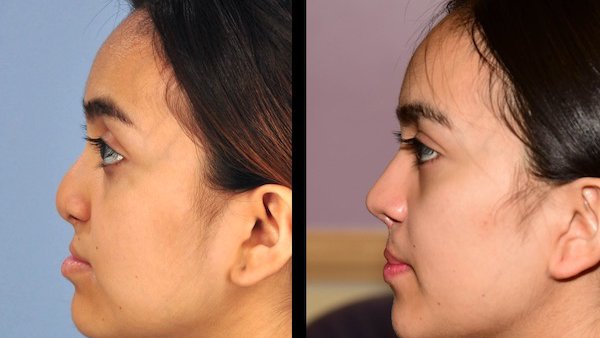
Rhinoplasty can improve both the external appearance and internal structure of the nose, enhancing breathing and facial harmony. Recovery typically involves temporary bruising and swelling, peaking around the third postoperative day. Patients are advised to avoid strenuous activity, nose blowing, and sun exposure for at least one week. Most can return to work within a week, though strenuous activities should be avoided for three weeks, and contact sports should be avoided for at least six weeks.
Improvements in nasal appearance are often immediately noticeable, while functional benefits such as improved breathing may develop gradually.
Facial scar revision and fat grafting
As individuals age, scarring or asymmetries from prior surgeries may become more visible or concerning. Touch-up procedures can enhance facial balance and support self-confidence.
Scar revision techniques — such as surgical excision, laser therapy, chemical peels, or injectable treatments — can improve the appearance of lip scars. Fat grafting, which involves transferring a small amount of fat from another area of the body to the upper lip, can enhance lip volume and symmetry.
These procedures are typically performed on an outpatient basis, with minimal recovery time. Patients may experience temporary swelling, discomfort, or numbness at the treatment site and can usually resume normal activities shortly thereafter.
Pediatric cleft programs provide essential early care and support for children and their families. As patients transition into adulthood, UT Southwestern’s adult craniofacial center continues that care, offering personalized treatment to help individuals meet the challenges and opportunities of adult life with confidence and comfort.
To talk with an expert about adult craniofacial surgery, make an appointment by calling 214-645-2353 or request an appointment online.