Sidelined by a sports injury? Bounce back with a customized return-to-play protocol
July 15, 2026

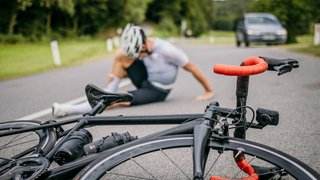
If you've suffered a major sports injury, you’ve probably also replayed the sensations when it happened: a sharp pain, a pop, or a sickening overextension. And let’s not forget that sinking feeling when you asked the doctor, “How long will I be out with this injury?”
Every athlete, from pros to weekend warriors, must face the same simple truth: healing from a sports injury requires proper rehabilitation and patience. Trying to bounce back too soon is a good way to land back in the doctor’s office.
While there’s no quick fix for a sports injury, following a customized return-to-play protocol can help you get back in action faster and safer.
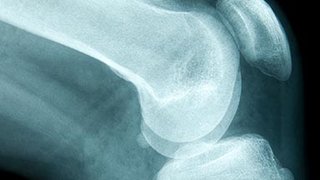
Similar to recovering from a concussion, a return-to-play protocol is a stepwise approach for athletes to safely recover from sports-related injuries. It is a fundamental part of treating injuries of the elbow, foot and ankle, hip and thigh, knee and lower leg, and shoulder.
UT Southwestern sports medicine specialists create customized return-to-play protocols based on your injury, your sport, and your goals for future performance. Every step in the recovery process will build on the previous one so you can clearly track your progress.
Whether you need physical therapy through physical medicine and rehabilitation (PM&R), surgery, or both, following your care plan can get you to the finish line faster with a lower risk of re-injury.
Read: Torn ACL: How reconstructive surgery gets athletes back in the game
How does a return-to-play protocol work?
No two athletes are the same, and a one-size-fits-all timeline for sports injury recovery may not account for the nuances of your body and your injury. This can lead to further strain and pain at the injury site, which can prolong your recovery.

Rather than trying to rush your healing, think of recovery as an athletic challenge. At each stage, you must "earn" the next level by successfully meeting physical milestones. Let’s take a severe ankle sprain as an example. The phases of your return-to-play protocol may include:
- Being non-weightbearing or weightbearing as tolerated, with or without a boot or crutches depending on the severity. You’ll also follow the RICE method – rest, ice, compression, elevation – and begin range-of-motion exercises on the ankle.
- Transition from the boot to your shoe or an ankle brace. You’ll begin resistance band, seated, and balance exercises.
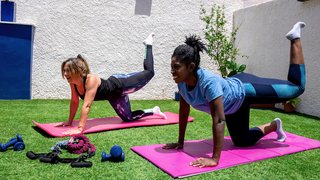
3. Work toward pain-free movement. You’ll build strength, regain awareness of movement and positioning, and practice controlled use of the joint through prescribed motions, such as:
- Single-leg balance progression
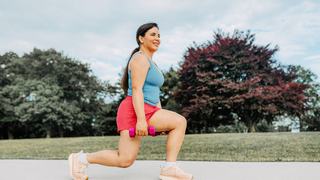
- Step-ups, lunges, and lateral band walks
- Treadmill walking and light jogging
4. Restoring sports-specific skills, such as explosive movement and multidirectional cutting drills. Movements will be focused on your favorite sport and may include contact simulation, volley strength, and resistive pivots.
If you experience worsening pain or swelling, we can always revert to the previous phase for a few days.
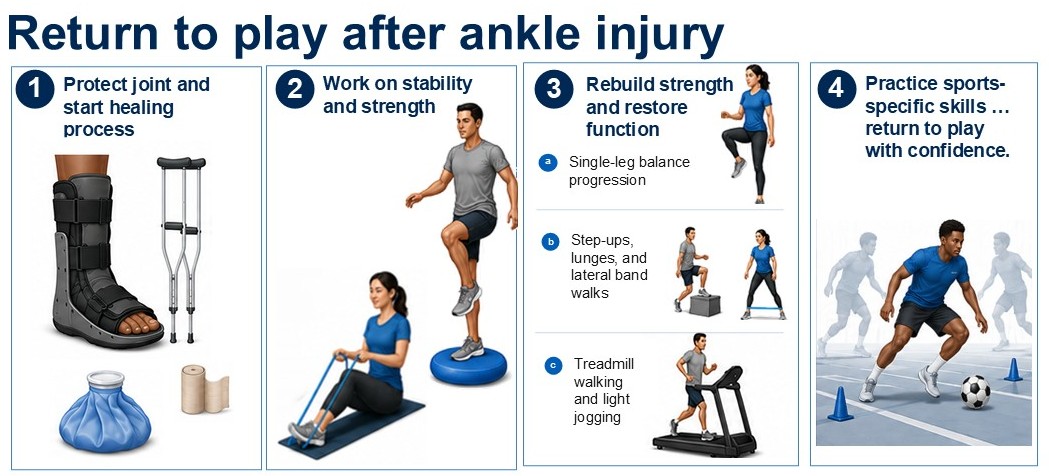
These steps are part of the return-to-play protocol used after a sports injury.
Injuries such as a ruptured Achilles tendon, a torn rotator cuff, or turf toe – among the most common in football – may require orthopaedic surgery. Your care team will work with you to “prehab” the injury, which means to strengthen the affected body area before surgery to achieve the best post-procedure outcomes.
No two sports treat your body the same, either. Runners, football players, and dancers will need to meet different milestones based on the quick movements and physical impacts of their sport. Functional testing helps us evaluate your sport-specific readiness as you heal. This might mean your return-to-play protocol involves milestones such as:
- Single leg hop, triple hop, and crossover hop
- Figure eight zigzag cuts
- Single leg squat
- Y balance test: Moving one foot at a time across the floor in a Y pattern
- T agility test: Sprinting and side-stepping in a T pattern
With intentional, measured strengthening, you’ll progress through each level of participation, from basic movements to practice to competition. We use advanced technologies and techniques to diagnose and treat sports-related injuries. Along with physical therapy, your treatment plan may include:
- Regenerative medicine, which involves repairing and regrowing damaged tissues
- Advanced imaging technology, such as high-resolution 3D MRI and CT scans
- Shockwave therapy, which breaks up soft tissue calcifications to stimulate healing
- Minimally invasive surgery with smaller incisions and less downtime than traditional open procedures

UTSW helps UFC star return to the ring
UFC fighter Kennedy Nzechukwu underwent reconstructive surgery on his left knee and spent eight months in rehab before returning to the sport he loves.
90% recovery benchmark
For athletes who can reasonably return to full-intensity sports, we often aim for a 90% benchmark. This means you should reach 90% of your former healthy capacity before returning to competition. Below that benchmark, you’ll be at an increased risk of re-injury.
Recovery isn’t just physical
It’s not uncommon for athletes to be physically ready to return to their sport before they are mentally prepared. You may be surprised by the toll that being sidelined can take on your mental health, which can include performance anxiety or involuntary hesitation responses such as flinching or avoiding contact.
Return-to-play protocols should address both the physical and emotional components of recovery. Talk with your care team about your plans and goals for your sport, which could include anything from being able to walk/run a 5K to playing elite-level sports.
Your care team will root for you, and we’ll help you understand and mitigate any risks involved with returning to your sport. Some sports that are hard on the body, such as boxing and distance running, inherently involve a level of health risks that may or may not be acceptable to you. And in some cases, athletes cannot safely return to pre-injury performance.
If you are struggling with a sports-related injury, don’t wait to seek care. Working with an experienced team can help you get back in the game safely with less risk of reinjury.
To talk with an expert about sports injury recovery, make an appointment by calling 214-645-2080 or request an appointment online.