Women face a higher risk of knee osteoarthritis: How to help protect your joints
September 9, 2026

Osteoarthritis of the knee, or when the cartilage at the end of the knee bones wears out, is not usually considered a life-threatening disease. But its effects can reach far beyond an aching joint – and women are particularly vulnerable to developing it.
As knee pain and stiffness worsen, patients begin to walk less, stop exercising, and withdraw from activities that they enjoy. Reduced mobility can contribute to weight gain, heart disease, social isolation, and depression.
Researchers have studied menopause and age-related hormonal changes to explain why women are more likely to develop knee osteoarthritis than men. We now know that the story likely begins much earlier in life.
Research at UT Southwestern, led by Paula Hernandez, Ph.D., is uncovering differences in the structure and biology of male and female knee cartilage that may be present from childhood. These findings suggest that protecting women’s knees should not begin at age 50 or 60. It should be a lifelong effort that includes healthy movement, good nutrition, injury-prevention training, and prompt treatment of significant knee injuries.
Our work approaches this challenge from two directions, translating laboratory research into the clinical setting. Orthopaedic surgeon Kathleen Keely Boyle, M.D., and her colleagues use the latest research insights to create personalized arthritis prevention and treatment plans for patients.
The goal is to control risk factors early and, when needed, select the most effective treatment option. Depending on the state of the knee cartilage and the patient’s symptoms, treatment can range from lifestyle changes to medication, injections, or knee replacement surgery.
Science in 60+
Articular cartilage research led by Paula Hernandez, Ph.D., Assistant Professor of Orthopaedic Surgery and Biomedical Engineering at UT Southwestern, is uncovering links between hormones and joint tissue health. See how discoveries in her lab could lead to more targeted treatments for patients with mobility issues.
What is cartilage, and what happens when it breaks down?
Osteoarthritis develops when cartilage wears down over time. It is the most common disorder affecting joints, with an estimated 33 million Americans living with the degenerative disease.
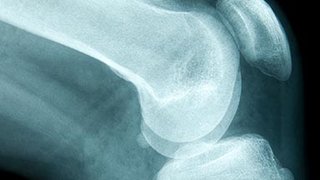
The knee is one of the joints most commonly affected by osteoarthritis. Inside the knee is articular cartilage – a thin tissue that covers the ends of the bones inside the joint. The cartilage helps the femur, tibia, and kneecap glide against one another with minimal friction. It also helps distribute the force that travels through the knee when you stand, walk, run, or jump.
Healthy cartilage looks shiny and smooth. But with injury, aging, genetic susceptibility, inflammation, and years of mechanical stress, cartilage can become rough, thin, or cracked. This is the onset of knee osteoarthritis.
Early signs of osteoarthritis in the knee may include:
- Stiffness after sitting or first thing in the morning
- Difficulty with stairs, squatting, or walking long distances
- Grinding or catching sensation in the joint
- Loss of motion
- Mild swelling
- Pain during or after activity
As osteoarthritis advances, cartilage can wear away until areas of the knee rub together with friction. This causes bone-on-bone pain, which can feel like sharp pain or general discomfort in the joint. Bone-on-bone pain can occur while walking or resting.
Later-stage knee osteoarthritis is notorious for keeping patients awake at night. But it’s not just the pain itself that may prevent you from getting a good night’s sleep. Poor sleep habits may make you more sensitive to pain during the day, worsening your symptoms even more. If you have problems sleeping, seek help from a healthcare provider to manage your pain.
Kathleen Keely Boyle, M.D., Assistant Professor of Orthopaedic Surgery at UT Southwestern Medical Center, talks about steps to take to improve the health of your knees.
What does research show about women’s knee cartilage?
Male and female cartilage looks alike at the whole-tissue level. Yet UT Southwestern research has revealed significant differences between male and female tissue in its mechanical properties, microscopic structure, and gene activity.
In this UTSW research study, male cartilage showed greater enrichment in proteins and pathways associated with stabilizing the extracellular matrix – the network that gives tissue its structure and elasticity. Female cartilage had more proteins connecting cells to that matrix. These differences appeared before the hormonal changes associated with menopause.
Another UTSW study examined clinical data across the lifespan of patients. It identified sex-related differences in cartilage, the meniscus, and the anterior cruciate ligament (ACL) that may arise before puberty and cannot be attributed to sex hormones alone.
Does the research mean women have ‘bad knees’?
No, female cartilage is not dysfunctional – it’s just not the same as men’s. And not every girl or woman is destined to develop osteoarthritis.
Male and female tissues have different structures, strengths, and injury-prevention needs. Dr. Hernandez describes this as differences in the “knitting” of cartilage. While two sweaters can look nearly identical from across the room, their fibers may be arranged differently. That’s why your sweater may stretch, withstand pressure, or respond to damage differently than a matching one on your friend.
Dr. Hernandez’s current research focuses on the differences in men’s and women’s knee cartilage “knitting.” Understanding when and how disparities emerge is an important step toward developing prevention strategies and treatments designed for women across their lifespans.
When should knee protection begin for female patients?
Osteoarthritis is often viewed as an older person’s disease, but knee injuries that can contribute to osteoarthritis may occur in childhood or young adulthood. A significant ACL or meniscus injury can permanently alter the mechanics of the joint, even after an expert repair. Knee injury also triggers substantial inflammation, which can begin a longer process of joint degeneration.
Young female athletes have a two- to eight-times higher risk of ACL injuries than their male counterparts. Sports that involve sudden cutting, pivoting, landing, or changes in direction – such as soccer, basketball, and volleyball – can be particularly demanding on the knees.
Parents, coaches, and young athletes can help reduce knee injury risk by proactively emphasizing:

- Age-appropriate strength and conditioning rather than year-round specialization in one sport
- Proper jumping and landing techniques – avoid straight-legged or one-legged landing
- Safe deceleration and pivoting/cutting techniques
- Intentional exercises to build strength in the glutes, core, hips, and quadriceps
- Adequate rest and recovery after exertion
- Prompt evaluation of a swollen, unstable, or painful knee
- Complete rehabilitation before returning to practice or competition
Related reading: High school athletes' most common injuries – and how to avoid them
5 pillars of osteoarthritis prevention for women
Some osteoarthritis risk factors, such as genetics and aging, can’t be modified. But plenty of others are well within our control. Dr. Boyle recommends following an anti-inflammatory way of life, starting with five common-sense choices that support knee health and help women stay active throughout their lifetime.
1. Choose nourishing foods
Build meals around vegetables, fruit, whole grains, beans, nuts, fish, and minimally processed foods. Limit heavily processed foods and excess added sugar. The Mediterranean diet is a clear and sustainable guide to follow. Nutrition is key to maintaining a healthy weight, which reduces the load on the knee and can relieve joint pain.
2. Reduce harmful environmental exposures
Avoid smoking and secondhand smoke. Smoking promotes inflammation, affects cardiovascular and bone health, and can make it more difficult to stay physically active. Environmental factors are not always under your control. Focus on exposures you can reasonably modify, such as using a HEPA air filter with your air conditioner to catch fine particles of irritants and staying indoors when there are active smoke or smog air quality alerts.
3. Discuss four supplements with a doctor
Patients commonly ask about supplements to support joint health and reduce inflammation. There are four supplements that we frequently discuss with our patients as a complement to – not a replacement for – medical care:
- Collagen: Contains protein, which is made up of amino acids and may support cartilage and joint health.
- Glucosamine and chondroitin: Two natural substances in cartilage that help with joint lubrication. In supplement form, they may help to reduce pain and stiffness.
- Turmeric: Its key component, curcumin, can help decrease inflammation.
- Beetroot powder: Contains natural plant pigments called betalains and other helpful antioxidants that calm swelling and fight cell damage.
Remember that “natural” does not automatically mean safe. Supplements are not regulated or tested in the same way as prescription drugs. Some supplements can increase risks with bleeding or anesthesia during surgery, and some can interact with medications and blood sugar. Talk with a healthcare provider before starting a supplement, particularly if you are pregnant, preparing for surgery, or managing a chronic health condition.

4. Prioritize two types of exercise
For busy adults, exercise often must become more intentional. Put 30 minutes on the calendar at least five days a week and make this time a priority. Focus on two types of exercise: low-impact aerobic movement and strength training.
Low-impact aerobic movement helps you maintain mobility, reduce stiffness, and keep your joints moving. Exercise options include:
- Walking
- Stationary or outdoor cycling
- Swimming or water aerobics
- Elliptical exercise
Strength and weight-bearing exercises support the muscles and bones that stabilize the knee. This might include resistance bands, light weights, body-weight exercises, or a structured strengthening program. Exercise should challenge you without causing sharp pain or substantial swelling. A physical therapist can help identify safe alternatives if exercises such as lunges, deep squats, or running aggravate your knee.
5. Practice healthy stress management
Chronic stress can affect sleep, eating habits, muscle tension, and inflammation. It also can make it harder to stay physically active and follow other healthy habits that support joint health.
Look for realistic ways to lower your stress level, such as regular movement, enjoying nature with loved ones, talking with a therapist, and practicing mindful meditation. It’s also important to get consistent, quality sleep, which allows the body to repair tissues and regulate immune function.
Related: Read “Women and sleep disorders: How to get better rest at all stages of life"
When should I see a doctor for knee pain?
It’s normal to be a little sore after a new activity or intense workout, especially as you age. But if your knee doesn’t improve with rest and activity modification, do not assume that persistent pain is simply a part of getting older. Talk with a doctor if:
- Pain occurs during most of the day on most days of the week
- Symptoms have not improved after one to three weeks
- Rest, ice, elevation, or activity modification are not helping
- Pain wakes you from sleep
- The knee repeatedly swells, catches, locks, or gives way
- You cannot perform activities required for work or daily life
- A sudden injury causes a pop, rapid swelling, instability, or inability to bear weight
Pain that began abruptly after twisting the knee and is concentrated on one side may indicate an acute meniscus or ligament injury. Arthritis-related pain develops gradually and usually occurs throughout the knee. However, symptoms can overlap, and a degenerative meniscus tear can occur as a part of osteoarthritis. A physical exam and imaging can help clarify the cause.
Nonsurgical treatment can help at every stage
Most patients with knee osteoarthritis do not begin with surgery. Treatment is tailored to the severity of arthritis, the patient’s health, and the activities that matter most to them. Nonsurgical options can include:

- Adjusting activities that trigger symptoms
- Ice, heat, or compression
- Low-impact aerobic exercise
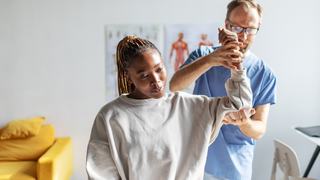
- Physical therapy to improve strength, flexibility, balance, and mechanics
- Weight management
- Use of a knee brace
- Use of assistive walking devices, such as canes, crutches and/or walkers
- Topical or oral pain relievers or anti-inflammatory medication
- Corticosteroid or other knee injections
When should I consider a knee replacement?
We generally start to discuss knee replacement surgery when two things are true: persistent pain limits your lifestyle despite nonsurgical therapies and imaging shows advanced joint damage.
Signs that it may be time for a knee replacement consultation include:
- Knee pain on most or all days
- Frequent nighttime pain that disturbs your sleep
- Difficulty walking more than a short distance
- Trouble with routine movements such as climbing stairs, walking through the grocery store, or rising from a chair
There are generally two types of knee replacement:
- Partial knee replacement: When arthritis is limited to one compartment of the knee, we can resurface only the damaged portion with metal and plastic components.
- Total knee replacement: If arthritis is more widespread in the joint, we can remove damaged cartilage and a small amount of underlying bone and replace it with metal components and a medical-grade plastic spacer.
For either type of replacement, physical therapy before and after surgery is crucial to regaining strength, balance, and mobility in the knee.
Knee replacement is a major surgery; you may be able to return to nonphysical work within a few weeks, and full recovery can take several months up to one year. While it can be tough to accept help at home, you’ll need a supportive team to help with driving and household duties for several weeks.
Protecting mobility across a lifetime
The differences between women and men when it comes to knee osteoarthritis cannot be explained by one hormone, injury, or lifestyle factor. Cartilage biology, bone and joint structure, environment, movement patterns, and experiences across the lifespan play a role.
That complexity is why sex-specific research matters. Mobility is central to long-term physical and emotional health. Knowing how to protect the knees across the lifespan maintains much more than the joint – it can help preserve your independence and quality of life.
To talk with an expert about knee osteoarthritis, make an appointment by calling 214-645-3300 or request an appointment online.