
We’re one of the world’s top academic medical centers, with a unique legacy of innovation in patient care and scientific discovery.
Knee Replacement and Revision Surgery
New Patient Appointment or 214-645-8300

Nationally Ranked in Orthopaedics – #1 in DFW
UT Southwestern Medical Center is ranked the No. 1 hospital for orthopaedic care in Dallas-Fort Worth and among the best nationally by U.S. News & World Report.

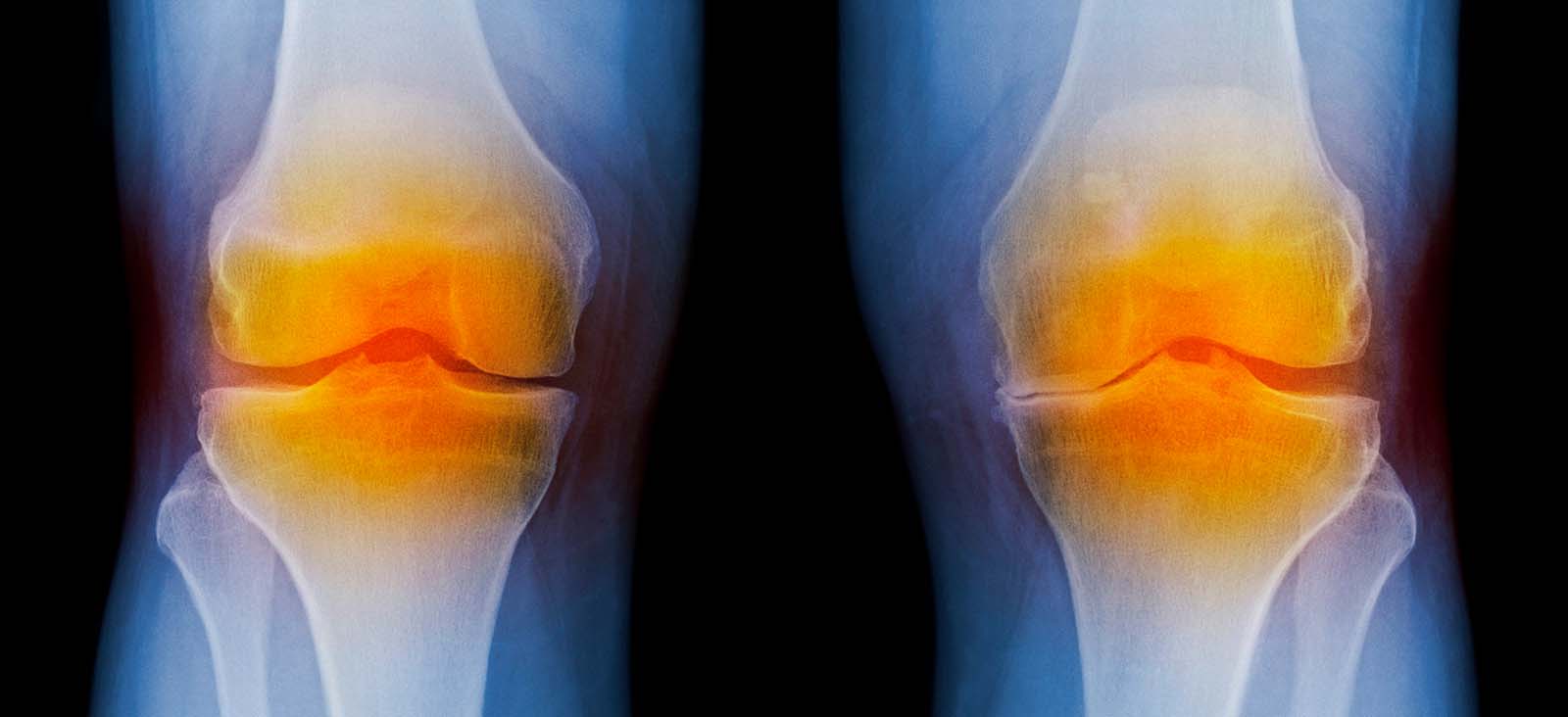
Knee replacement surgery can reduce pain, improve mobility, and enhance quality of life for individuals with worn-down cartilage in the knee. We also offer revision surgery to correct or replace a prior knee implant.
At UT Southwestern Medical Center, our orthopaedic specialists are advancing care to achieve outstanding results for patients who need total or partial knee replacement surgeries. We help patients experiencing severe, ongoing knee pain and instability that may be making it difficult for them to walk, stand, get up from a chair, or do many other daily and recreational activities.
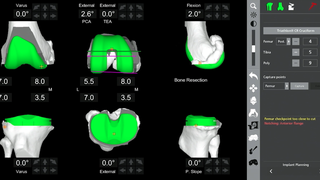
Our UT Southwestern orthopaedic surgeons are at the forefront of innovations to improve knee replacement procedures, surgical techniques, technology, and devices to ensure patients benefit from the latest medical advances. We are one of a few sites chosen to receive an upgraded, leading-edge robotic system used for knee replacement surgery. This advanced technology helps our surgeons place implants more precisely, resulting in a smoother recovery and minimal pain for patients.

What Are Knee Replacement and Knee Revision Surgeries?
During knee replacement surgery, also known as knee arthroplasty, our UT Southwestern orthopaedic surgeon removes damaged bone and cartilage in the knee that has become worn out or eroded. It is replaced with an implant designed to move smoothly and make the patient’s knee work better. This can be done in one part of the knee (partial knee replacement) or on both sides of the knee (total knee replacement).
Revision knee replacement is performed when a previous replacement wears out, becomes loose, gets infected, or is no longer functioning as intended. Revision surgery is often more complex and may require specialized implants and techniques.
How Does Knee Replacement Differ from Knee Revision?
Knee replacement surgery happens when a patient gets the knee joint replaced for the first time. Knee revision surgery occurs if the patient experiences significant problems with the first implant and the implant needs to be fixed or replaced.
Why Choose UT Southwestern for Knee Replacement or Revision Surgery?
At UT Southwestern, we treat the whole patient, focusing on overall health and recommending surgery only when necessary. We recommend knee replacement when nonsurgical treatments are no longer effective.
Our team performs hundreds of knee replacement surgeries every year. Data shows that surgeons and hospitals performing a high number of procedures (like the volume at UT Southwestern) consistently achieve safe, effective results for patients.
UT Southwestern orthopaedic surgeons create personalized treatment plans for knee replacement patients and use advanced surgical techniques when performing procedures. For patients, this means a faster recovery and greatly improved mobility without pain, allowing them to get back to activities as quickly as possible and stand without pain.
Our orthopaedics, physical medicine and rehabilitation, and sports medicine teams provide expert-level evaluation and treatment of severe knee injuries and disease, offering the advanced surgical techniques and technology that patients need to achieve the best possible outcomes.
UT Southwestern is also a major referral center for patients requiring rehabilitative care for knee injuries. Our physical medicine and rehabilitation team’s board-certified researchers and therapists are among the most respected in the nation. We provide the medical and scientific leadership that enables us to make an important difference in the lives of our patients.
In addition, our UT Southwestern knee replacement surgery team provides patients with the advantages of:
- Fellowship-trained orthopaedic surgeons with experience treating the full spectrum of knee injuries and conditions
- Advanced imaging and diagnostic technology to accurately evaluate knee injuries and conditions that guide care decisions
- Care within a leading academic medical center recognized for orthopaedic expertise and innovation
- A commitment to communicating. Our team is available to answer questions before and after surgery.
- Effective care after surgery that aids recovery and allows movement as quickly as possible
What Are the Benefits of a Knee Replacement or a Revision Surgery?
These procedures can provide long-term relief and improved movement. We use minimally invasive robotic surgery for almost all knee replacement and knee revision surgeries. Benefits include:
- Return to activity more quickly
- Improved range of motion
- Longer-lasting implants (20 or 30 years, or even longer)
Additional potential benefits of knee replacement or revision surgery include:
- Reduced or eliminated chronic knee pain
- Improved joint stability and movement
- Restored ability to perform daily activities
- Return to recreational and sports activities, such as golf and pickleball
- Corrected deformity or alignment problems
- Improved overall quality of life
What Conditions Does a Knee Replacement Treat?
Knee replacement surgery may be recommended when joint damage causes ongoing pain, stiffness, or loss of function. Conditions that can lead to the surgery include:
- Knee arthritis, caused by gradual cartilage breakdown over time due to aging or repeated joint stress. This includes osteoarthritis, rheumatoid arthritis, and post-traumatic arthritis
- Severe knee injury
- Avascular necrosis (AVN), which occurs when reduced blood flow leads to bone damage
What Conditions Does a Knee Revision Treat?
Knee revision surgery is performed to address problems that arise after a primary knee replacement, including:
- Implant wear or loosening: caused by use over time
- Instability of the knee: when the knee feels unstable or gives way after replacement
- Knee replacement failure: mechanical failure of one or more implant components, leading to loss of joint function or alignment
- Infection around the joint: a serious complication that often requires revision surgery to remove infected components and restore joint health
What Should Patients Expect Before Knee Replacement or Revision Surgery?

Before surgery, patients typically undergo a detailed evaluation to determine the most appropriate treatment approach. Preparation may include:
- A thorough physical examination and joint assessment
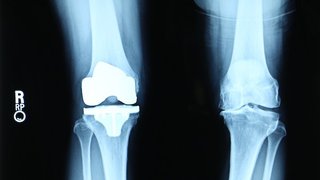
- Imaging studies such as X-rays
- A review of medical history and current medications
- Presurgical testing, including blood work
For revision patients, we also perform:
- A specialized computed tomography (CT) scan and/or bone scan to assess loose implants
- Fluoroscopy to determine if the implant is affecting soft tissue
Our multidisciplinary approach to care includes joint replacement education to help patients prepare for surgery; pain management; and physical therapy to help patients move and be active after having a joint replaced. Also, some patients may be asked to adjust medications or address other health concerns before surgery.
Patients are provided with our UT Southwestern Patient Journey Guide, which explains what to expect and how to prepare for the surgery. The guide includes a list of equipment needed, requirements before surgery, and explanations of the surgery and recovery.
UT Southwestern’s Total Knee Arthroplasty ERAS (ERAS) program is designed to help patients return to health more quickly after undergoing the procedure.
What Should Patients Expect During Knee Replacement Surgery?
Patients typically go home the same day that they have knee replacement surgery but may stay overnight, depending on the circumstances. During the procedure, the orthopaedic surgeon removes damaged joint surfaces and places implants to re-create knee movement.
The procedure is performed under anesthesia, which keeps patients comfortable and prevents pain during surgery. UT Southwestern uses nerve blocks and local injections to help reduce pain, lessening the need for opioids and helping patients recover more quickly.
Our knee replacement surgeons use the latest robotic surgery equipment and software, along with CT scans, to guide surgery. These tools allow us to precisely plan the surgery ahead of time, resulting in better outcomes. Our surgeons guide the robot during surgery and adjust the plan if needed. Partial and total knee replacement surgery takes about 45 minutes to two hours.
Knee revision surgery is more complex and may involve removing old implants, addressing bone loss, and placing new components. Procedures can take two to four hours, depending on the complexity. Most patients are still able to go home the same day as the knee revision surgery.
What Should Patients Expect After a Knee Replacement?
Recovery begins shortly after surgery and continues for months. Our team of nurses and therapists works closely with our surgeons to provide patients with successful rehabilitation.
After surgery, patients may expect:
- Pain management with medication and other therapies
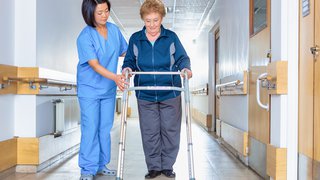
- Early movement and walking with assistance
- Physical therapy to restore strength and flexibility
- A gradual return to daily activities
- Follow-up visits to monitor healing and implant function
It’s normal to experience pain after the surgery. Postoperative pain relief focuses on non-narcotic methods, including nerve blocks, local injections, and medication – which speeds recovery and limits side effects.
We customize rehabilitation to meet the needs of each patient, with a goal of easing their transition from the hospital to home. If needed, a social worker can help make arrangements for home assistance services, such as in-home therapy and nursing services, as well as attendants to help with daily living needs.
In general, the recovery phases include:
- First two to three weeks: Activities are limited and patients will likely use crutches or a walker.
- Weeks three to 12: Patients should see steady functional improvement and more activities are allowed.
- After three to four months: Patients return to full activity (full recovery can take up to a year).
Family members also play a vital role in a patient’s rehabilitation. Our staff provides families with information about support groups and other resources that are an integral part of our rehabilitation program for all joint replacement patients.
What Support Services for Knee Replacements and Revisions Does UT Southwestern Offer?
Support services are designed to guide patients through every stage of care and include:
- Physical therapy and rehabilitation programs
- Pain management
- Care coordination before and after surgery
- Education resources for recovery and long-term joint health
Is Knee Replacement Surgery Right for Me?
At UT Southwestern, our team provides relief and treatment options for patients who are having trouble walking, standing, getting out of chairs, or enjoying activities they love. Our first step to determining the approach to care is evaluating the cartilage in the knee. We then discuss treatment options and only recommend partial or total knee replacement after determining that nonsurgical care, such as physical therapy, injections, and/or medications, will not be effective.
What Clinical Trials Are Available for Knee Replacements and Revisions?
UT Southwestern participates in clinical research to improve surgical outcomes and recovery for knee replacement patients.
Our doctors are currently involved in device development and testing of new features of the robot used for surgery. They also are participating in clinical trials aimed at better treating infections after surgery.
Clinical trials may be available for eligible patients, depending on their diagnosis and treatment plan. Ask our doctors about current studies or search for clinical trials.
Related Conditions and Treatments

UT Southwestern’s patient care app – UTSWMyCare – helps you easily manage your health and stay connected to UTSW and your doctor, all in a secure and safe environment.

Explore our Patient Resource Guide for an overview of the amenities, services, and clinics at UT Southwestern.
MedBlog





Results: 5 Locations
Orthopaedic Surgery
at UT Southwestern Medical Center at Park Cities 8611 Hillcrest Road, 2nd Floor, Suite 250Dallas, Texas 75225 214-692-3490 Directions to Orthopaedic Surgery at UT Southwestern Medical Center at Park Cities, Dallas Parking Info for Orthopaedic Surgery
Orthopaedic Surgery and Sports Medicine
at UT Southwestern Frisco 12500 Dallas Parkway, 3rd FloorFrisco, Texas 75033 469-604-9070 Directions to Orthopaedic Surgery and Sports Medicine at UT Southwestern Frisco, Frisco Parking Info for Orthopaedic Surgery and Sports Medicine
Orthopaedic and Sports Medicine Programs
at UT Southwestern Medical Center at Richardson/Plano 3030 Waterview Parkway, 1st FloorRichardson, Texas 75080 972-669-7179 Directions to Orthopaedic and Sports Medicine Programs at UT Southwestern Medical Center at Richardson/Plano, Richardson
Orthopaedic, Sports Medicine, and Rehabilitation Programs
at UT Southwestern Medical Center at Las Colinas 6121 N. State Highway 161, 3rd Floor, Suite 300Irving, Texas 75038 469-647-4704 Directions to Orthopaedic, Sports Medicine, and Rehabilitation Programs at UT Southwestern Medical Center at Las Colinas, Irving