


Find a Clinical Trial
Search for opportunities to participate in a muscle or bone research study.
New Patient Appointment or 214-645-8300
UT Southwestern Medical Center's treatment for hip fractures is rated as "High Performing" by U.S. News & World Report, placing us among the nation’s top hospitals for these procedures.

UT Southwestern Medical Center specializes in hip reconstruction and hip replacement surgery (total hip arthroplasty). Our specialists in orthopaedics and physical medicine and rehabilitation provide expert-level care for patients with severe hip pain and, when surgery is required, offer the latest surgical techniques and technology.
Unmanageable hip pain can have a profound impact on a patient’s life, making everyday activities a struggle. In these cases, hip reconstruction or total hip replacement surgery can help individuals move freely again.
Successful total hip replacement has been linked to the experience of the surgeon and the volume of the procedures he or she has performed. Surgeons at UT Southwestern perform a high volume of hip replacement surgeries, which translates into positive outcomes and low complication rates for patients.
UT Southwestern’s experts in orthopaedics and physical medicine and rehabilitation have helped set national quality standards regarding how joint replacement procedures should be performed. We are also among a small number of North Texas surgeons skilled in arthroscopic hip surgery, hip preservation surgery, and periacetabular osteotomy (PAO). Our specialists are also trained in minimally invasive procedures, including the direct anterior approach.
Our surgeons stay up to date on the latest hip replacement techniques, technology, and devices to ensure patients benefit from the newest medical advances.
We offer hip reconstruction and replacement surgery for patients with hip pain and damage that results from:
Symptoms of a hip injury or disorder that might require reconstruction or replacement surgery include:
Total hip replacement is a major surgery, so our doctors closely monitor each case to determine the best course of treatment.
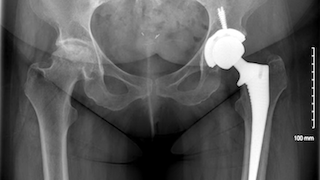
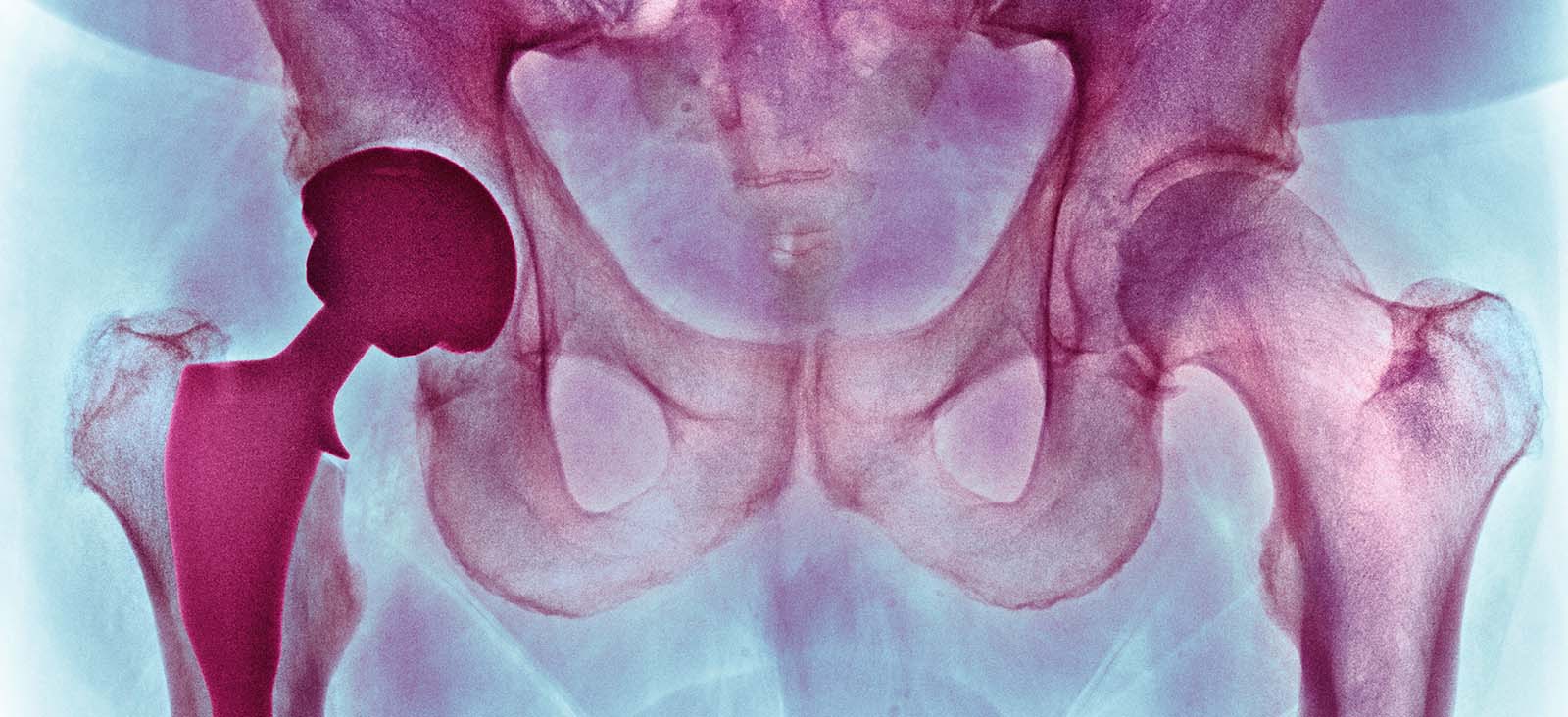
We begin by asking each patient about his or her medical history and conducting a thorough physical examination to evaluate the strength and mobility of the hip. We then order diagnostic tests such as X-rays and magnetic resonance imaging (MRI) to view the extent of the deformity or damage. We are even at the forefront in advanced imaging, including three-dimensional computed tomography (CT) and MRI.
For patients with severe hip pain, we might first offer focused conservative measures such as medication and physical therapy. However, if those fail, the patient might be a candidate for hip reconstruction or replacement surgery.
Depending on the patient’s needs, we might recommend one of the following hip reconstruction techniques:
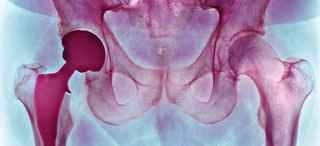
In a total hip replacement surgery, the surgeon replaces cartilage that has deteriorated beyond repair with an artificial joint (implant) that the doctor selects to best meet the patient’s needs.
We want your hip surgery and recovery to go as smoothly as possible. Our orthopaedics team will be by your side throughout your surgical journey.
We are offering you this guide to help you prepare for surgery and better understand what to expect during and after surgery.
Download English version (PDF)
Download Spanish version (PDF)
Following hip surgery, our team of nurses and therapists works closely with our surgeons to provide patients with a viable and successful rehabilitation. We offer patients rehabilitation therapy, medications, exercise, and nutritional advice. This coordinated approach maximizes efforts to regain motion for long-term recovery.
We customize our rehabilitation programs to meet each patient’s needs, with a goal of easing the transition from the hospital to home. If needed, a social worker can help make arrangements for home assistance services, such as in-home therapy and nursing services, as well as attendants to help with daily living needs.
Family members also play a vital role in a patient’s rehabilitation. Our staff provides families with information about support groups and other resources that are an integral part of our rehabilitation program for all joint replacement patients.
Search for opportunities to participate in a muscle or bone research study.
We’re one of the world’s top academic medical centers, with a unique legacy of innovation in patient care and scientific discovery.