

Compassionate Care Throughout the Journey
We provide excellent, compassionate care for patients with all types of blood cancers. From a personalized patient experience to cutting-edge treatments, discover what sets us apart.
New Patient Appointment or 214-645-4673
Recognized as one of the leading programs of its kind, UT Southwestern's hematologic malignancies team has performed approximately 2,500 bone marrow transplants (also known as stem cell transplants) and more than 300 CAR T-cell infusions, achieving some of the strongest survival rates in the region.
Our highly specialized program is part of the Harold C. Simmons Comprehensive Cancer Center, the only National Cancer Institute-designated comprehensive cancer center in North Texas.
A bone marrow transplant is a procedure that replaces unhealthy or cancerous cells in the blood and bone marrow – the tissue inside bones that produces blood-forming cells – with healthy cells that restore normal blood cell production.
Bone marrow transplants can treat people who have:
People might need a bone marrow transplant to:
There are two main types of bone marrow transplants: autologous, which use the patient’s own stem cells, and allogeneic, which rely on stem cells from a donor. Doctors consider several factors to determine the best transplant option for each patient.
A person might receive an autologous transplant if their cancer is particularly sensitive to high-dose chemotherapy or radiation or if no suitable donor is available. It’s often chosen for conditions such as lymphoma and multiple myeloma, and it can be a good option for older patients who might not tolerate the risks associated with donor transplants.
With autologous transplants:
Autologous transplants use the patient’s own stem cells, so they do not provide the added immune effect from donor cells that can help attack remaining cancer. With improved collection techniques at UT Southwestern, collecting stem cells after effective treatment reduces the cancer burden, and greatly reduces the chance that cancer cells are present in the collected stem cells. Because disease control with autologous transplant relies mainly on high-dose chemotherapy, the risk of relapse can be higher in some conditions compared with allogeneic transplants, which use donor immune cells.
An allogeneic transplant may be recommended when a cancer, most often leukemia or myelodysplastic syndrome, requires chemotherapy or radiation and donor immune cells to help eliminate remaining cancer. In some situations, lymphomas or multiple myeloma may also be treated this way. Donors can include a matched sibling, an unrelated volunteer from a donor registry, a partially matched family member (haploidentical donor), or umbilical cord blood.
With allogeneic transplants:
Allogeneic transplants carry higher risks than autologous transplants, including graft-versus-host disease. Immune recovery can be slower, increasing the risk of severe infections. Treatment-related mortality is also higher, reflecting the complexity of matching, transplant procedures, and long-term care.
CAR T-cell therapy is most commonly used to treat certain blood cancers, including multiple myeloma, lymphoma, and leukemia. Researchers are also studying its potential use in other cancers and selected non-cancer conditions through ongoing clinical trials.
At present, autologous CAR T-cell therapy, which uses a patient’s own immune cells, is the most widely available approach. Allogeneic CAR T-cell therapy, which uses donor-derived cells, is still being evaluated in clinical trials.
With autologous CAR T-cell therapy:
Before receiving CAR T-cells, patients receive a short course of low-dose chemotherapy (called lymphodepleting chemotherapy) to help prepare the body for the modified cells. After infusion, the CAR T-cells can expand inside the body and actively seek out and destroy cancer cells.
Unlike stem cell transplantation, CAR T-cell therapy does not rely on high-dose chemotherapy to eliminate cancer. Instead, it works by re-educating the immune system to recognize and fight the disease. This approach can lead to deep and sometimes long-lasting responses, even in patients whose cancer has returned after multiple treatments.
However, CAR T-cell therapy can cause unique immune-related side effects, including inflammation (cytokine release syndrome) and neurologic symptoms, which require close monitoring at a specialized treatment center. While relapse can still occur in some patients, CAR T-cell therapy offers a powerful option for cancers that are difficult to control with conventional treatments.
Established in 1998, UT Southwestern’s Bone Marrow Transplant Program is among the most established in the region. For patients and families, this means proven treatment protocols, stable care teams, and well-coordinated treatment pathways.
Our program is accredited by the Foundation for the Accreditation of Cellular Therapy, which recognizes top-quality patient care. We have also been deemed a national center of excellence by all major national health insurance carriers.
Our experienced physicians, nurses, and other care providers guide patients through every step of the bone marrow transplant process. We strive to deliver the most appropriate and effective care possible, and we’re here to manage care from diagnosis to personalized treatment and beyond.
Our unique approach to transplant care includes:
At UT Southwestern, we perform bone marrow transplants and cellular therapies for patients ranging in age from early adulthood to their 80s. We also offer a dedicated pediatric bone marrow transplant program providing specialized care for younger patients.
Learn more about bone marrow transplants at UT Southwestern.
BMTs are used to treat a wide range of conditions that affect the blood, bone marrow, and immune system. In some cases, a transplant is part of cancer treatment. In others, it replaces bone marrow that no longer works properly due to disease or genetic conditions.
BMT may be used to treat blood cancers, including:
Bone marrow transplant can also treat noncancerous blood and immune conditions, such as:
In select cases, BMT may be used for rare genetic or metabolic disorders that damage bone marrow or prevent the body from making healthy blood cells. A transplant can replace defective marrow with healthy, functioning stem cells.
Not every condition is treated the same way, and transplant may not be appropriate for everyone. Doctors carefully evaluate each patient’s diagnosis, overall health, and treatment goals to determine whether a bone marrow transplant is the right option.
Care begins with a consultation and pretransplant workup. Patients meet their transplant physician and nurse, review medical history, and complete tests to ensure that they are healthy enough for transplant. They’ll also meet with a transplant coordinator and a social worker, who can help answer questions and prepare them for what’s ahead.
Some patients may be admitted to William P. Clements Jr. University Hospital before the transplant, while others may begin as outpatients based on their medical needs.
Patients may need one or more tests, such as:
As part of the preparation, the care team will place a long, thin tube (called a central line) into a large vein in the patient’s chest or neck. This catheter stays in place throughout treatment and allows the team to safely infuse stem cells, medications, and blood products.
The collection process depends on the type of transplant:
Once testing and stem cell collection are complete, the patient begins the conditioning process to prepare the body for transplant. Conditioning involves chemotherapy and sometimes radiation to:
Our care team will tailor the conditioning regimen based on the patient’s diagnosis, overall health, and the type of transplant they’ll receive. Most patients receive chemotherapy before a bone marrow transplant as part of conditioning. Some receive high-dose chemotherapy, while others may get lower doses or different medications (reduced-intensity conditioning).
The bone marrow transplant takes place after completion of the conditioning process. This milestone day is called "Day 0" because it marks the beginning of the recovery timeline.
The transplant infusion is painless, and the patient will be awake the entire time.
If the stem cells were frozen, the team will thaw them in a warm water bath just before the infusion. The patient receives premedications such as Tylenol® and Benadryl®. Then the care team will infuse the stem cells through the central line.
A nurse will stay with the patient throughout the procedure to monitor them, keep them comfortable, and help with any side effects, such as:
In the days after transplant, blood cell counts will temporarily drop before the new cells begin to grow. During this time, the patient may be at increased risk for infection, anemia, or bleeding. Our care team will closely monitor the patient and may give medications, blood transfusions, or growth factors to help blood cell counts recover.
The new stem cells make their way to the bone marrow, where they begin to produce healthy blood cells. Most patients start to see their counts recover within 10 to 20 days.
Most patients stay in the hospital for three to four weeks after transplant, depending on how they’re doing. After discharge, they return to our clinic two to three times a week during the first 100 days. Full recovery can take several months to a year, and our transplant team will continue to support them every step of the way.
Full immune recovery takes time. While many patients resume daily activities within several months, complete recovery can take up to a year or longer, especially after donor transplants.
Bone marrow transplant outcomes vary widely. Success depends on factors such as the disease being treated, transplant type, donor match, patient age, and overall health. For some conditions, transplant can lead to long-term remission or cure. For others, it may extend survival or improve quality of life. Ongoing follow-up care is essential to monitor for complications and support long-term health.
We provide excellent, compassionate care for patients with all types of blood cancers. From a personalized patient experience to cutting-edge treatments, discover what sets us apart.
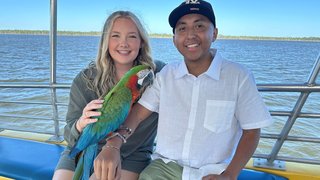
When Spencer Swann fell ill with pneumonia after his 39th birthday, he found he had stage 3 multiple myeloma. With the care of his wife Anna, his support system, and his team at Simmons Cancer Center, he is now in remission. After undergoing an autologous stem cell transplant, the first outpatient transplant at our Cancer Care Outpatient Building, Spencer was given a “second birthday.” Now, Spencer is training for his second marathon.
Chuck was the first person in the U.S. to receive a new transplant technique at Simmons Cancer Center to treat his acute myeloid leukemia – thanks to his son Jon donating stem cells.

Cancer Care at the Highest Level. Anywhere.
Our team of hundreds of leading cancer physicians and oncology-trained support staff is a trusted partner in returning patients with cancer to good health.
UT Southwestern’s patient care app – UTSWMyCare – helps you easily manage your health and stay connected to UTSW and your provider. Find a physician. Access your medical records. Schedule appointments, and much more.
We’re one of the world’s top academic medical centers, with a unique legacy of innovation in patient care and scientific discovery.