


Search for opportunities to participate in a clinical research study.
Abdominal Wall Hernias
New Patient Appointment or 214-645-8300
The UT Southwestern Hernia Repair Program offers the most advanced care for all abdominal wall hernias. A team approach brings specialists from other disciplines together with our surgeons to provide the most comprehensive care available for patients with abdominal wall hernias.
What Is an Abdominal Wall Hernia?
An abdominal hernia occurs when all or part of an internal organ or tissue bulges through a weakened part of the abdominal wall that normally contains it within the body. Men and women of all ages can develop hernias, which usually result from a combination of muscle weakness and strain. Though the most common site of hernia formation is the groin, numerous other abdominal sites can herniate.
What Are the Types of Abdominal Wall Hernias?
We are equipped to handle the following types of abdominal wall hernias:
- Congenital and acquired hernias, including inguinal, incisional, epigastric, umbilical, and other ventral hernias
- Incarcerated hernias, a condition in which the protruding tissue cannot be returned to its proper position
- Strangulated hernias, in which blood flow to the herniated tissue is cut off, creating a potentially life-threatening condition
What Causes Abdominal Wall Hernias?
Abdominal wall hernias often develop when there is a weak spot in the muscles or tissue of the abdomen. That weakness might be present from birth, or it can happen over time because of aging, injury, pregnancy, or a previous surgery.
A hernia forms when pressure pushes tissue through the weak area. This pressure can come from everyday activities or health conditions such as:
- Lifting heavy objects often
- Long-term coughing
- Straining during bowel movements or urination
- Pregnancy
- Obesity
- Injury to the abdomen
- Infection after surgery
- Previous hernias
- Surgical cuts or openings in the abdominal wall
- Certain genetic or connective tissue conditions
In many cases, an abdominal wall hernia is caused by more than one factor. A person might have a weak area in the abdominal wall, and repeated pressure on that area can cause tissue to push through.
What Are the Symptoms of Abdominal Wall Hernias?
The most common symptom of an abdominal wall hernia is a bulge or lump under the skin. The bulge might be easier to see when standing, coughing, lifting something heavy, or straining. It might get smaller or go away when lying down.
Some abdominal wall hernias cause little or no discomfort. Others can cause symptoms such as:
- Mild pain or aching near the bulge
- A feeling of pressure or heaviness in the abdomen
- Burning or soreness at the hernia site
- Swelling that changes with position or activity
- Pain that gets worse with lifting, coughing, or straining
It’s important to seek medical care immediately if someone has symptoms of an incarcerated or strangulated hernia. Signs include:
- Severe or worsening pain
- Nausea
- Fever
- Vomiting
- Redness in the hernia area
- A bulge that no longer goes back in
Why Choose UT Southwestern for Abdominal Hernia Repair?
UT Southwestern surgeons use both traditional and advanced techniques to accommodate all types of hernias, including abdominal wall hernias. The UT Southwestern Hernia Repair Program brings together a range of experts in:
- Endocrine surgery
- General surgery
- Gynecology
- Imaging and radiology
- Internal medicine
- Oncology
- Physical medicine and rehabilitation
- Plastic surgery
- Transplantation
- Urology
Our hernia and abdominal wall reconstructive surgery specialists treat defects that result from:
- Recurrent hernias
- Fistulae, abnormal passages between two body parts formed by disease or injury
- Trauma
- Mesh infections
- Transplantation
- Tumor removal defects
- Surgical complications, such as after bariatric surgery
- Obesity
- Congenital defects, such as urologic conditions
How Are Abdominal Wall Hernias Diagnosed?
Patients are typically assessed by the entire team in a coordinated visit to diagnose an abdominal wall hernia. Testing and imaging are performed in one location during the same appointment, reducing unnecessary visits.
Our doctors begin with a physical exam to determine whether the patient has an abdominal wall hernia and, if so, where it is located.
In some cases, patients need additional imaging, such as:
- Computed tomography (CT) scan, using specialized X-ray technology that takes cross-sectional images to produce 3D images of the abdomen to pinpoint a hernia
- Ultrasound, using sound waves to produce images of the abdomen to locate a hernia
- X-ray, to produce images of the abdomen to assess blockages in the bowel
How Are Abdominal Wall Hernias Treated?
In recommending the best hernia surgery option for each patient, our surgeons consider multiple factors, such as overall health, any previous surgical procedures, ability to heal, and the size of the hernia.
UT Southwestern surgeons have experience with all main surgical approaches:
- Primary repair: Sutures placed in the abdomen to close the hernia opening for simple and small defects
- Safe mesh repair: Prosthetic or biologic mesh to repair openings that are too large for a primary technique; mesh is placed in such a way that complications are rare
- Complex hernia and abdominal wall repair: A combination of primary and mesh repair techniques, which can include muscle flaps for complete coverage of the abdomen
Our surgeons are also experienced in minimally invasive techniques for hernia and abdominal wall surgery, such as:
- Laparoscopic surgery: The surgeon uses a laparoscope (thin, flexible tube with a lighted camera) inserted through a small incision and miniature instruments inserted through other small incisions to perform the surgery.
- Robotic surgery: Using a computerized system, the surgeon controls mechanical arms that hold a camera and surgical instruments to perform laparoscopic surgery. The surgeon commands a console that provides a high-definition, magnified 3D view of the surgical site. The robotic arms have a greater range of motion than human hands and wrists, providing greater flexibility for complex, delicate procedures.
At UT Southwestern, our surgeons also:
- Correct genetic and inherited abdominal wall defects in infants and children, make cosmetic repairs, and fix unsuccessful procedures done elsewhere
- Treat abdominal walls weakened by injury, accident, prior surgery, pregnancy, or other causes
- Provide coordinated rehabilitation, follow-up care, and support for each patient
- Communicate and coordinate care with each patient’s referring physician
- In some cases, recommend watchful waiting or supportive devices to manage symptoms
What Support Services for Abdominal Wall Hernias Does UT Southwestern Offer?
Our comprehensive patient care includes management of associated risk factors such as obesity, diabetes, respiratory insufficiency, steroids, infection, smoking, and even inherited disorders such as Marfan syndrome.
Our whole-team approach ensures an accurate diagnosis and optimal hernia surgical repair. As a regional and national referral center for complex abdominal wall reconstruction, we treat patients from all over the country.
Related Conditions and Treatments

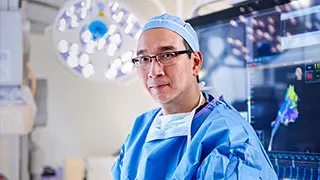
We’re one of the world’s top academic medical centers, with a unique legacy of innovation in patient care and scientific discovery.

MedBlog




Results: 3 Locations
Digestive Disease
at UT Southwestern Frisco 12500 Dallas Parkway, 2nd FloorFrisco, Texas 75033 469-604-9020 Directions to Digestive Disease at UT Southwestern Frisco, Frisco Parking Info for Digestive Disease
Outpatient Building
1801 Inwood RoadDallas, Texas 75235 214-645-8300 Directions to Outpatient Building, Dallas Parking Info for Outpatient Building
University Hospital Wound Care Clinic
at Professional Office Building 2 5939 Harry Hines Blvd., 3rd Floor, Suite 104Dallas, Texas 75235 214-645-7900 Directions to University Hospital Wound Care Clinic at Professional Office Building 2, Dallas Parking Info for University Hospital Wound Care Clinic